Building Stronger Credit Habits
Credit repair isn't only about fixing the past. Responsible habits are what move you forward — here's how they work.
Some people come to us after a denial or a high interest rate. Others want to establish credit for the first time, rebuild after a rough patch, or get ready for a future mortgage or auto loan. Whatever the starting point, understanding how credit works helps you make decisions that support your goals.
Our credit building guidance is practical education. We explain payment history, credit utilization, account age, credit mix, and new credit activity — and we talk about habits like reviewing statements, keeping revolving balances manageable, and skipping applications you don't need. These practices don't guarantee a particular score or lending outcome, but they help you approach credit decisions with a clearer head.
These are actual results from past clients, previously shared on Instagram. Every credit file is different, so treat these as examples of what the process can look like, not as a promise of what yours will do.
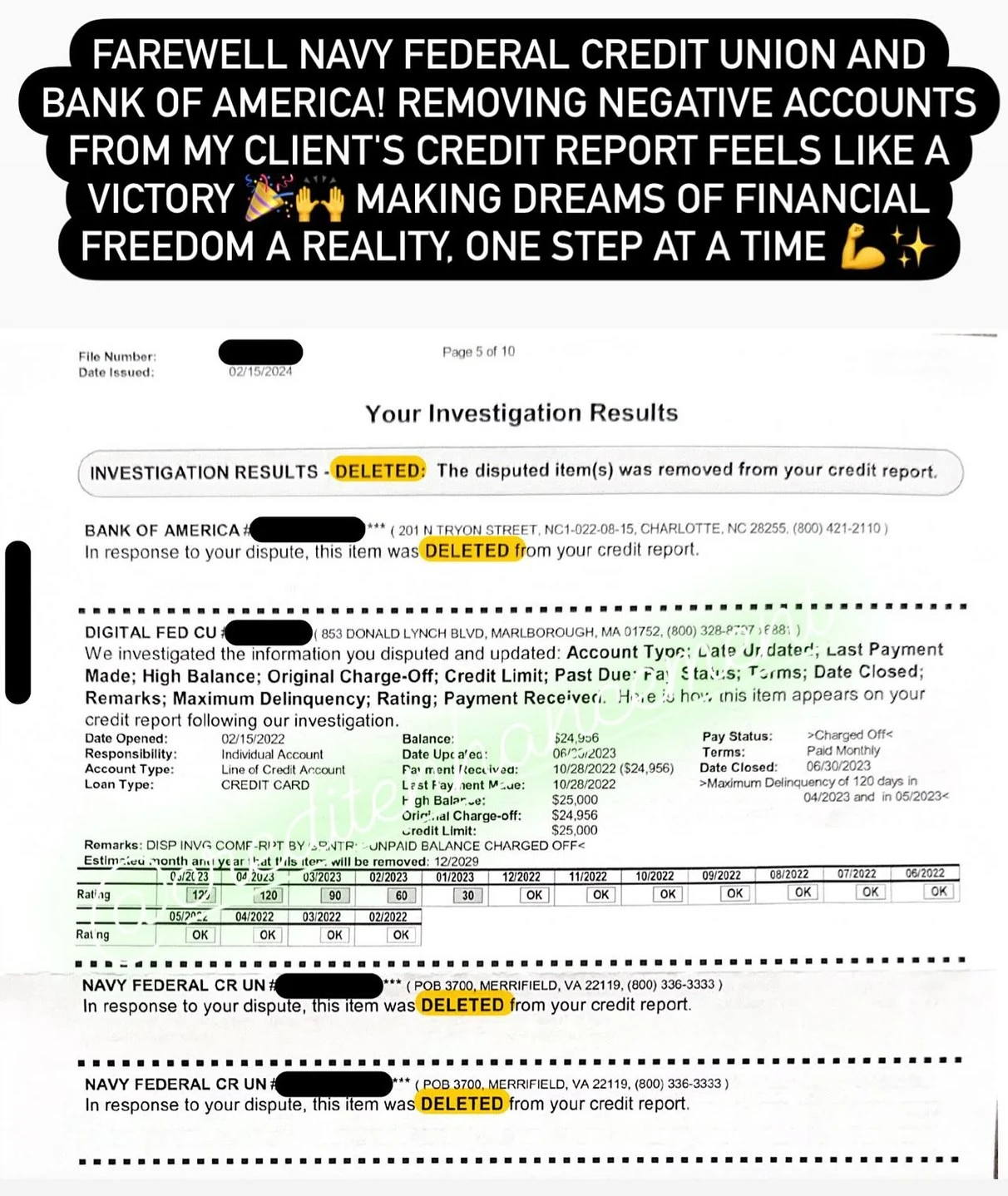
A February 2024 bureau investigation letter showing a Bank of America account and two Navy Federal accounts deleted from a client's credit report after dispute.
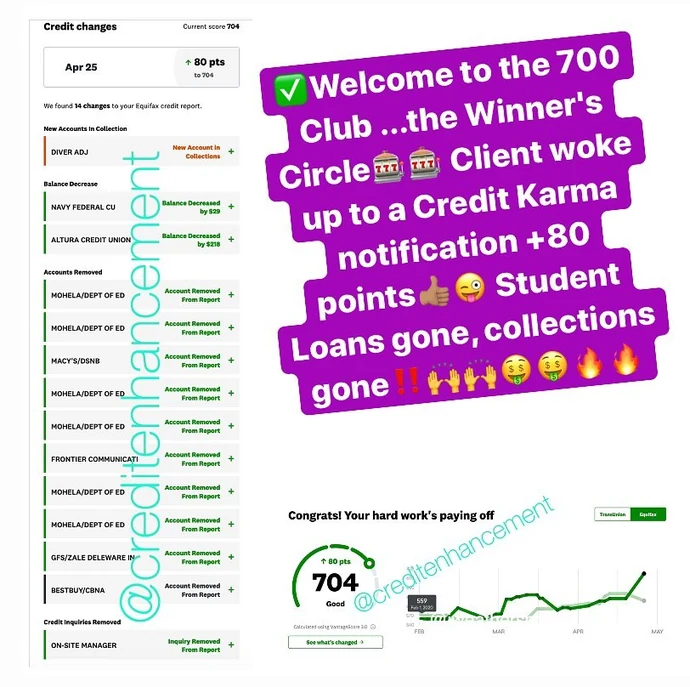
Equifax score up 80 points to 704, with six MOHELA student loan accounts and other entries removed, April 2020.
Results vary from person to person and depend on what is in each credit file. Nothing here promises a particular score increase or deletion.
Building credit without knowing your scores is like building without a blueprint. For a dollar, you can see where all three bureaus have you — Equifax, Experian, and TransUnion — so the habits you build are aimed at the right numbers.
Your starting scores decide which moves matter most, and you can only see them by looking.
MyScoreIQ gives you 7 days for $1, then $34.99 a month after that. You can cancel anytime.
Credit building is about more than paying one bill on time. Here are the topics we walk through with you, and how each one may affect your profile.
We explain how on-time payments — and reported late payments — can affect your credit profile.
We help you understand revolving balances, available credit, and how utilization is usually evaluated.
We explain how the age of your accounts and the types of credit you use may be taken into account.
We talk about how new applications and recent inquiries may affect your credit profile.
We encourage regular review of your credit reports and statements, so you can catch errors and understand changes as they happen.
We explain how credit works so you can make informed decisions long after our conversation ends.
We focus on habits you can actually maintain — not shortcuts or unrealistic outcomes.
Whether you're starting from scratch or rebuilding after difficulties, we tailor the guidance to your circumstances.
We talk through your credit reports, your account history, and your financial goals.
We explain payment history, utilization, account age, credit mix, and new credit activity in plain language.
We help you find responsible habits that actually work for your situation.
We talk about how to monitor your reports and statements over time.
Building credit usually takes time. Responsible habits can support your profile gradually, but nobody can promise a specific score change or a timeline.
New accounts can affect your credit profile in different ways. We can talk about how account age, credit mix, and inquiries may be considered before you apply for new credit.
No — credit history can be built through different types of accounts, including installment loans and other reported obligations. The right approach depends on your circumstances.
Closing an account can affect your credit utilization and account age. We can talk through the factors to consider before you close an account.
Ready to build stronger credit habits? It starts with your current credit picture. Call (346) 301-6424.