Fixing What's Wrong on Your Reports
Late payments that weren't late. Accounts that aren't yours. Balances that don't match. If your reports have errors, they may be costing you — let's look at what can be challenged.
Your report might show a payment as late when you paid on time. A balance that doesn't match your statements. An account you have never heard of. The same debt listed twice. An account status that is plain wrong, or information so old it shouldn't still be there. These aren't just annoyances — they shape how lenders and other authorized parties judge your financial history.
We help you figure out what may be inaccurate and what to do about it. That means preparing clear, specific disputes that name the information in question and explain why it may be wrong. The Consumer Financial Protection Bureau explains how the dispute process works, including what the bureaus must do once you challenge an entry and how long they have to respond. We don't claim every negative entry can be removed — accurate negative entries generally stay, and you should understand that before you start, not after.
These are actual results from past clients, previously shared on Instagram. Every credit file is different, so treat these as examples of what the process can look like, not as a promise of what yours will do.
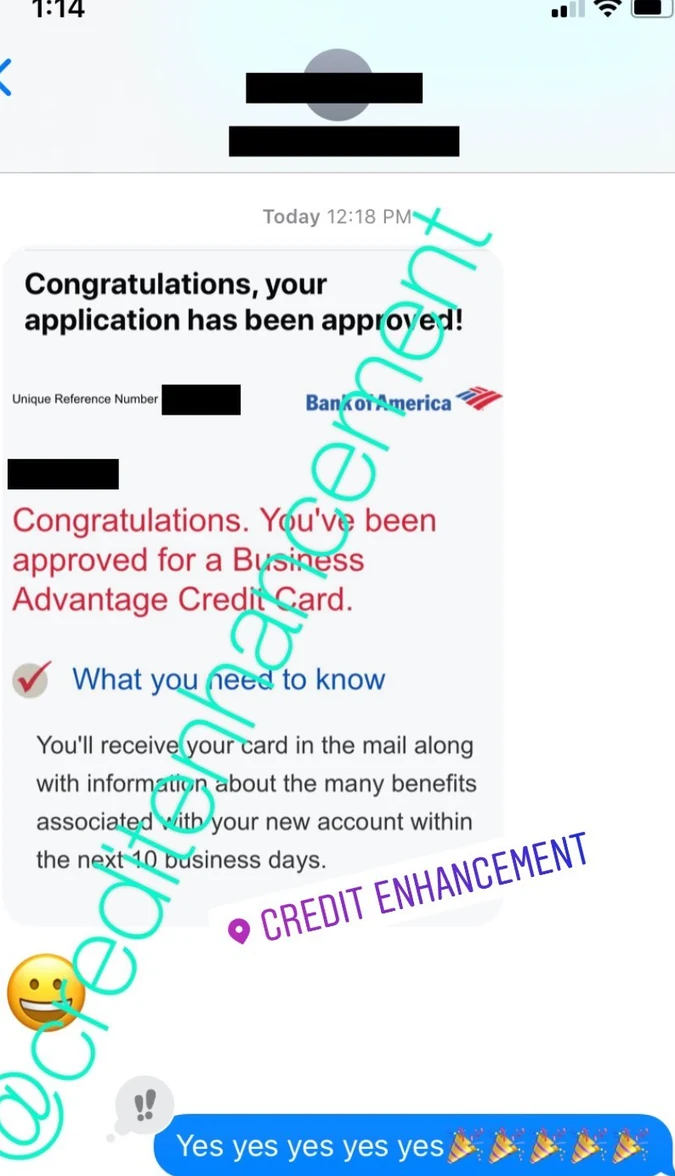
A client was approved for a Bank of America Business Advantage Credit Card in May 2020.
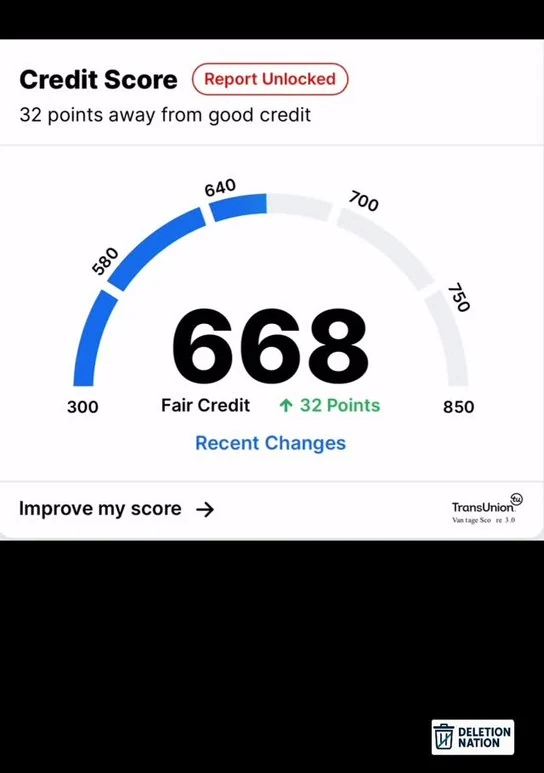
Three TransUnion clients cleared back to back in August 2025. One client had 8 inquiries deleted in a single sweep; another had Apple Card, Comenity, CareCredit, and USAA accounts removed; a third had a Synchrony account deleted. One client rose 32 points overnight, to 668.
Results vary from person to person and depend on what is in each credit file. Nothing here promises a particular score increase or deletion.
An account you don't recognize, a balance that doesn't match, a late payment you know you made on time — errors like these sit on your reports until someone looks. For a dollar, you can read all three bureaus' reports yourself and see what's actually there.
You can't challenge what you haven't seen. A look at your own reports is the first step.
MyScoreIQ opens 7 days of score access for $1, then $34.99 a month. Stop anytime.
Not every negative entry can be challenged — a dispute should target information that is inaccurate, incomplete, unfamiliar, or unsupported. Here are the problems that come up most often.
Names, addresses, employment information, and other personal details can appear incorrectly on a credit report. We help you spot them.
An unfamiliar account may be a reporting error — or a sign of an identity concern. We help you review unfamiliar accounts and figure out which it is.
We compare reported late payments and account statuses against your records to find details that don't line up.
An account that appears more than once can distort your reported balances and your overall credit picture. We help you identify duplicates.
Old or incomplete entries don't always follow the reporting rules. We help you understand how they are reported and whether the information looks right.
A dispute works best when it names the exact information being challenged and explains why it may be inaccurate. Vague letters don't get results.
We focus on legitimate reporting problems — not on suggesting that every negative entry can be made to disappear.
We help you understand how to respond after a dispute is filed, and what additional information may be useful.
We start with the entries that concern you and talk through the details in your credit reports.
We help you identify information that appears inaccurate, incomplete, or inconsistent with your own records.
We help prepare a specific dispute that names the information in question and explains the concern.
We talk through how to read responses from the reporting agencies and what steps may make sense afterward.
A dispute should target information that appears inaccurate, incomplete, or unsupported. Accurate negative information generally can't be removed through a legitimate accuracy dispute.
Supporting documents can strengthen a dispute, but the key is naming the specific information and explaining why it may be inaccurate. We can talk through what information may be useful.
It varies — it depends on the reporting agency, the information provider, and how complex the issue is. We don't promise a particular timeline.
Yes, you can dispute inaccurate information directly with the credit reporting agencies. Some people prefer guidance when putting together a clear and specific dispute.
Think something on your credit report is wrong? Let's take a closer look at it together. Call (346) 301-6424.