Life After Bankruptcy
The Discharge Was the Fresh Start — Your Reports Should Reflect It
Filing bankruptcy in Houston is a hard decision, and the discharge is supposed to be the turning point — debts wiped clean, a chance to start over in Gulfton, Acres Homes, or out in Tomball. But the discharge only helps if your credit reports show it correctly. Discharged accounts still showing balances, or debts marked wrong after the case closed, can hold you back long after the court is done. Before you decide what to do, learn what your reports actually say.
A Chapter 7 bankruptcy generally stays on a credit report for 10 years from the filing date, while a Chapter 13 generally stays for 7 years. The bankruptcy itself is only part of the picture — every account that was part of the case should be reported as discharged, with a zero balance and the right status. When a discharged credit card in Meyerland or an old auto loan from Spring Branch still shows a balance, or an account that was never part of the case is marked as included in bankruptcy, the file doesn't match the court record.
We help you read the bankruptcy entries the way a bureau reads them: the filing date, the chapter, the discharge date, and the status of each account tied to the case. If something in an entry doesn't line up with your discharge paperwork, it may be challenged with the reporting agency or the information provider. Accurate bankruptcy information generally stays for its full reporting period — so the work is about making sure what stays is accurate.
These are actual results from past clients, previously shared on Instagram. Every credit file is different, so treat these as examples of what the process can look like, not as a promise of what yours will do.
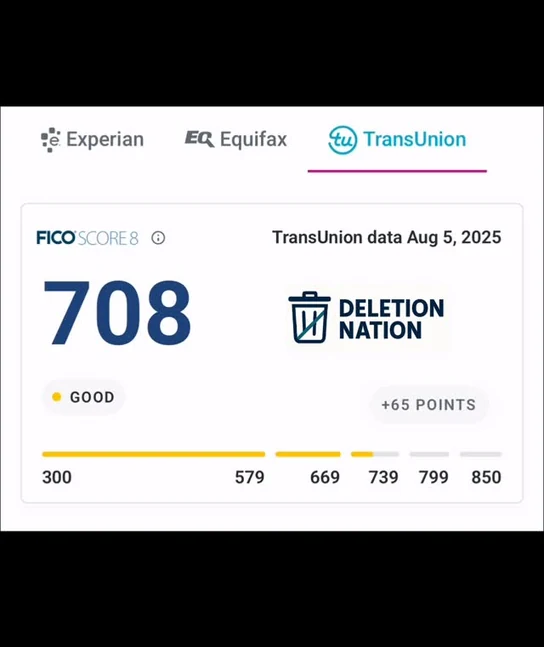
A client's TransUnion FICO score reached 708 in August 2025, up 65 points in a single update.
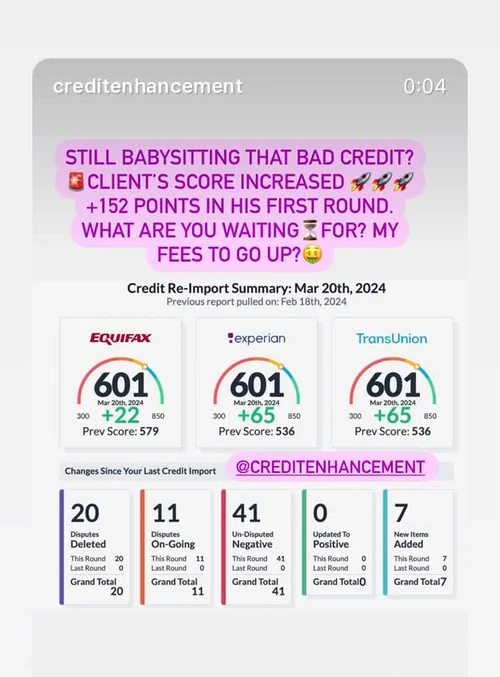
In a first round in March 2024, 20 disputes were deleted and all three bureaus landed at 601: Equifax up 22 points from 579, Experian up 65 from 536, and TransUnion up 65 from 536.
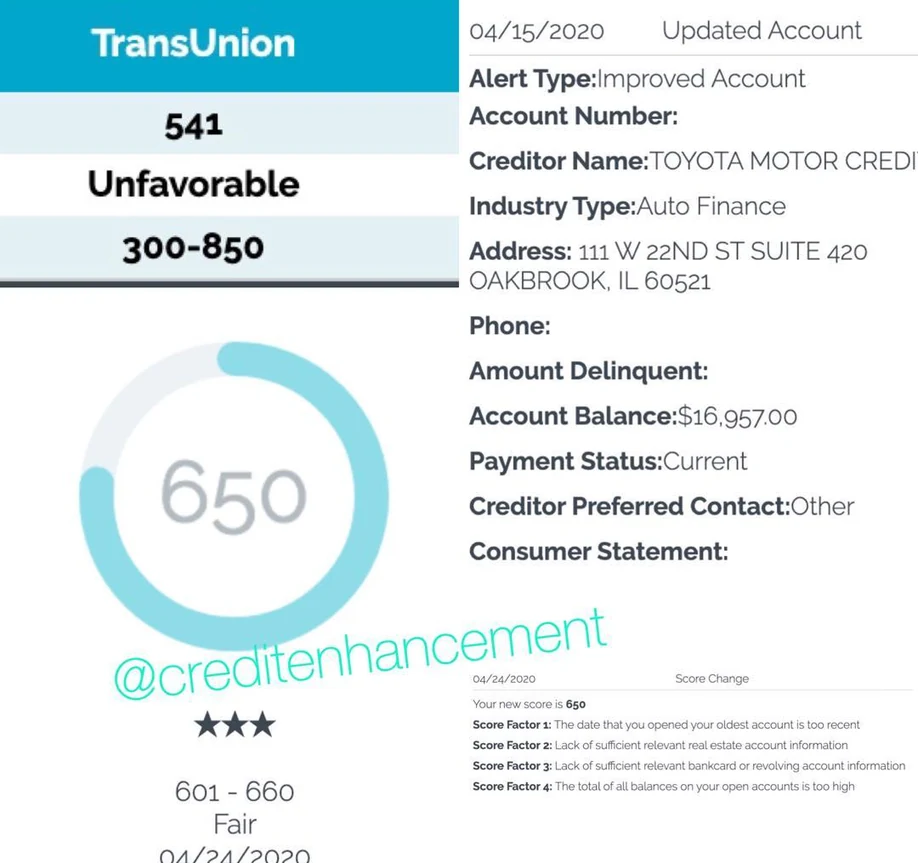
A client's TransUnion score rose from 541 to 650 in April 2020, a 109-point increase in 20 days, after TransUnion audited the file.
Results vary from person to person and depend on what is in each credit file. Nothing here promises a particular score increase or deletion.
Post-bankruptcy cleanup starts with seeing the whole file — the bankruptcy entry itself, and every account that should show as discharged. A balance that should read zero is easy to miss until you read all three reports.
For a dollar, you can read your scores and entries from Equifax, Experian, and TransUnion before you decide what to do about them.
A dollar with MyScoreIQ opens 7 days of access to your scores, then $34.99 a month if you keep it. Cancel anytime.
A bankruptcy case touches many accounts at once. We help you understand each piece and spot accuracy problems.
We explain how each chapter is reported, how long it generally stays, and what the filing and discharge dates mean.
We help you find accounts that were discharged but still show a balance, a past-due status, or late payments after the filing date.
We review which accounts are marked as included in bankruptcy, and whether any account that wasn't part of the case carries the label by mistake.
We check the filing date, the discharge date, and the dates on each account against your court paperwork.
We talk through whether an entry has inaccurate information that may warrant a dispute with the reporting agency or the information provider.
Your discharge order tells the truth about what was wiped out. We help you compare it line by line with what the bureaus show.
A single case can involve a dozen accounts. We help you check them all, not just the bankruptcy entry itself.
The discharge was a new beginning. We help you make sure the reports reflect it, and talk through habits that keep the file moving forward.
We talk through the bankruptcy entry and the accounts tied to it on your credit reports.
We help you review whether discharged accounts show a zero balance and the right status.
We help you identify information that appears inaccurate, incomplete, or inconsistent with your discharge paperwork.
We explain dispute options, communication with creditors, and practical credit habits.
A Chapter 7 bankruptcy generally stays on a credit report for 10 years from the filing date.
A Chapter 13 bankruptcy generally stays on a credit report for 7 years from the filing date.
A discharged account should generally show a zero balance and a discharged status. If it still shows a balance, the reporting may be inaccurate, and the entry may be challenged with the reporting agency or the information provider.
If a bankruptcy entry or an account tied to it has inaccurate information, it may be challenged with the reporting agency or the information provider. Accurate bankruptcy information generally stays for its full reporting period.
Your discharge was meant to be a fresh start. Let's go through what the bureaus are showing and talk about your options. Call (346) 301-6424.