Dealing With a Late Payment
One Late Payment Shouldn't Define Your Credit for Years
Houston runs on tight schedules — refinery shifts out in Baytown, rotations at the Medical Center, long drives down I-10 from Katy. One payment slips past its due date, the servicer reports it late, and suddenly a lease in the Heights or a mortgage in Pearland feels out of reach. Before you decide what to do, learn what that entry actually says — and whether the details in it are right.
A late payment usually shows up after an account goes 30 days or more past due, and the mark can stay on a credit report for up to seven years. It can raise the cost of a car loan on I-45, complicate an apartment application in Montrose, or slow down a home purchase in Cypress — and it stings most when the payment was made, the amount was wrong, or the date on the report doesn't match your bank records.
We help you read exactly what the bureaus are showing: the creditor, the date of the late payment, how many days late it was marked, and whether the same entry looks different from one bureau to the next. If something in the entry doesn't line up with your records, it may be challenged with the reporting agency or the information provider. Accurate late payment information generally stays, even when it is unfavorable — so the work starts with getting the facts straight.
These are actual results from past clients, previously shared on Instagram. Every credit file is different, so treat these as examples of what the process can look like, not as a promise of what yours will do.
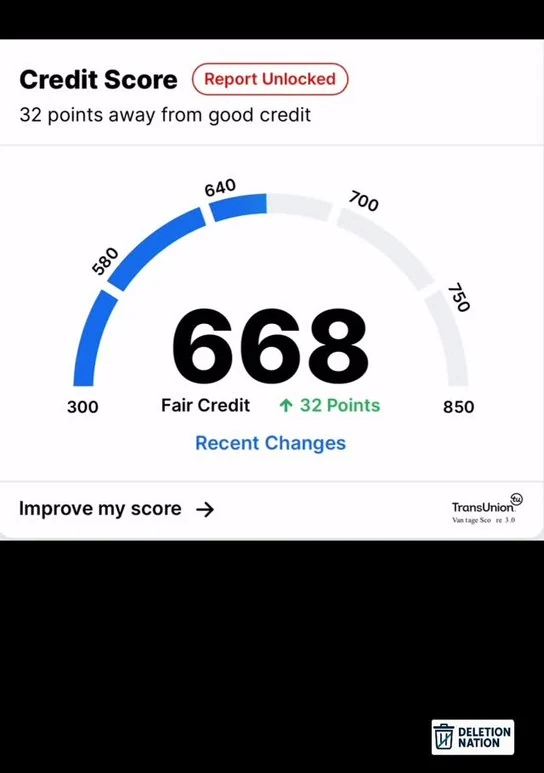
Three TransUnion clients cleared back to back in August 2025. One client had 8 inquiries deleted in a single sweep; another had Apple Card, Comenity, CareCredit, and USAA accounts removed; a third had a Synchrony account deleted. One client rose 32 points overnight, to 668.
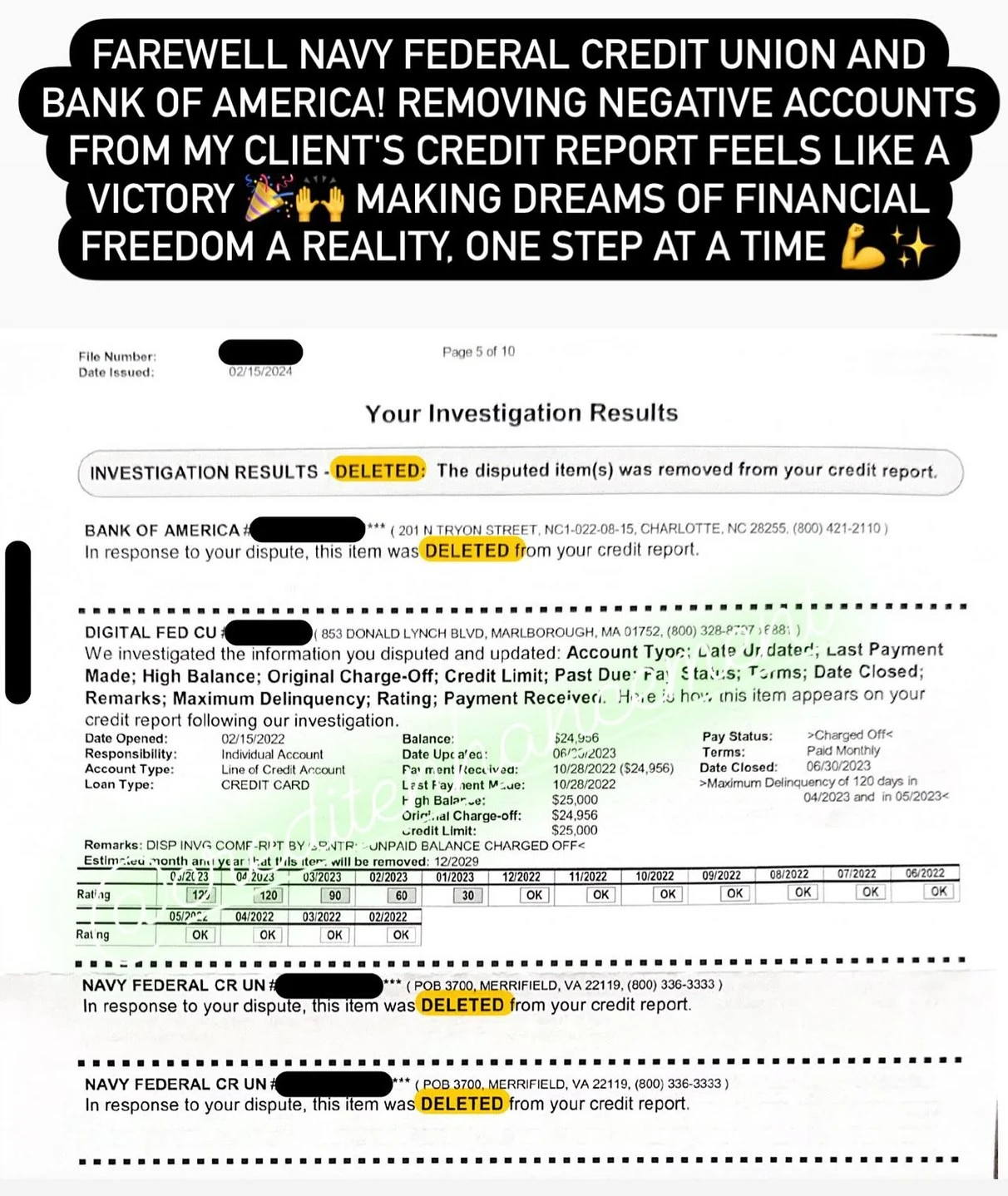
A February 2024 bureau investigation letter showing a Bank of America account and two Navy Federal accounts deleted from a client's credit report after dispute.
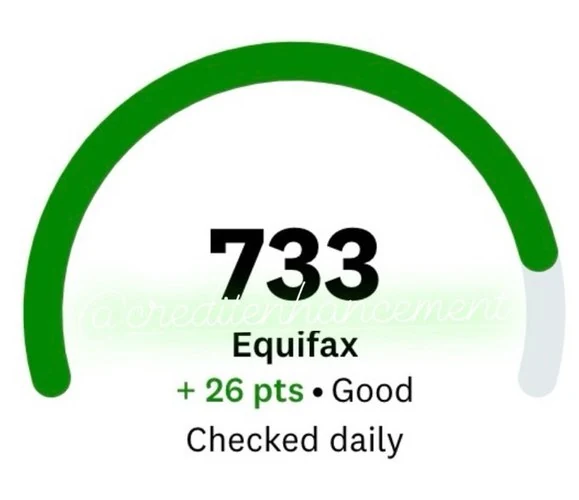
A client reached 733 on Equifax after a 26-point increase, March 2024.
Results vary from person to person and depend on what is in each credit file. Nothing here promises a particular score increase or deletion.
You can't challenge what you can't see. A late payment that shows up as 60 days late on one bureau and 30 days late on another is worth a close look — but only if you can read the entries side by side first.
For a dollar, you can read your scores and entries from Equifax, Experian, and TransUnion before you decide what to do about them.
A dollar with MyScoreIQ opens 7 days of access to your scores, then $34.99 a month if you keep it. Cancel anytime.
Late payments don't all look the same on a credit report. We help you understand the differences and spot accuracy problems.
We review whether the entry shows 30, 60, or 90 days late, and how the account status is described on each bureau's report.
We help you check the reported date of the late payment against your own payment records and bank statements.
We compare the entry across Equifax, Experian, and TransUnion, because the same late payment can be reported differently by each one.
We talk through how to document a payment that went through on time, or a payment the servicer applied to the wrong date.
We talk through whether an entry has inaccurate information that may warrant a dispute with the reporting agency or the information provider.
A late payment feels personal, but the entry is just data — a date, a number of days, and a status. We help you read it as data first.
The same account can look different on each bureau. We help you check all three before you act on any one of them.
We explain dispute options, what records to keep, and practical habits that help you stay current going forward.
We talk through the late payment entries showing on your credit reports.
We help you review the reported dates, the days late, and the account balance tied to the entry.
We help you identify information that appears inaccurate, incomplete, or inconsistent with your records.
We explain dispute options, communication with the servicer, and practical credit habits.
If the late payment entry has inaccurate information, it may be challenged with the reporting agency or the information provider. Accurate late payment information generally stays for up to seven years from the date of the late payment.
Paying the account may change its current status, but it doesn't automatically change the history of the late payment. The reporting rules decide how long accurate information stays.
If your records show a payment was made on time and the report says otherwise, that mismatch is worth documenting. We can talk through the records that help support a factual dispute.
A late payment generally stays on a credit report for up to seven years from the date of the late payment, even if the account is later brought current.
A late payment on your report doesn't have to stay a mystery. Let's go through what the bureaus are showing and talk about your options. Call (346) 301-6424.