Someone Else Used Your Identity
Accounts You Never Opened Shouldn't Be on Your Report
You open your mail in the Heights or check your report from a coffee shop in EaDo, and there's an account you never opened — a card from a store you've never visited, a loan you never applied for. Someone used your name, and now their accounts are sitting on your credit reports. Before you decide what to do, learn how the law lets you ask the bureaus to block information that came from identity theft.
When accounts are opened in your name by someone else, the damage isn't just the balance — it's the late payments, the collections, and the inquiries that follow. Under federal law, section 605B lets you ask a credit bureau to block information that resulted from identity theft, but the request has to be put together the right way: an identity theft report, the items that match it, and proof of who you are. A report that is missing one of those pieces can be sent back, and the fraudulent accounts stay put.
We help you put the pieces together: the identity theft report from the FTC or a police report, a list of the accounts and inquiries that match it, and your proof of identity. If an entry on your report came from identity theft and the paperwork matches, you may ask the bureau to block it. Accurate information about your own accounts generally stays — the 605B lane is for information that isn't yours at all.
These are actual results from past clients, previously shared on Instagram. Every credit file is different, so treat these as examples of what the process can look like, not as a promise of what yours will do.
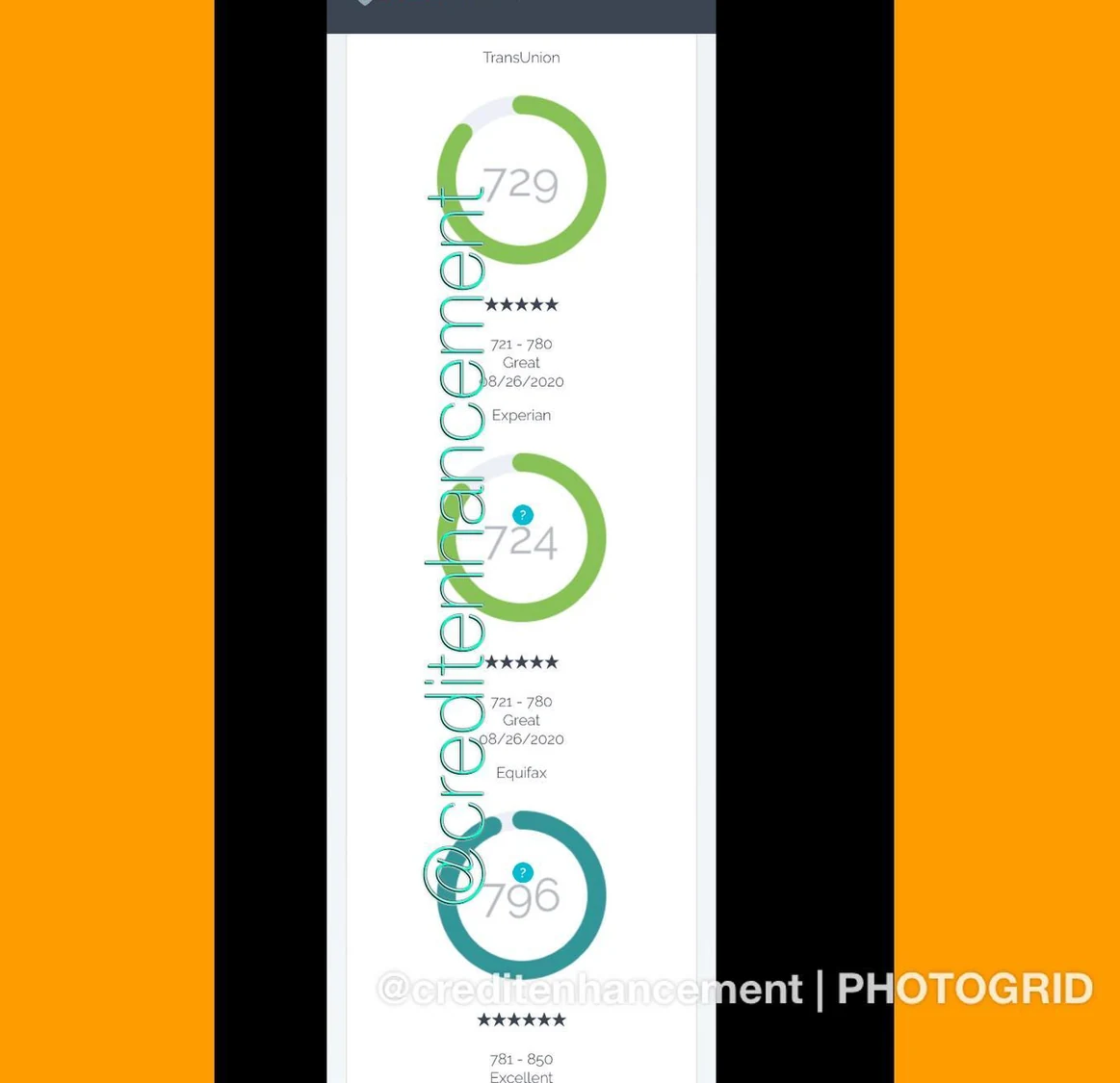
A client's three-bureau scores in August 2020: TransUnion 729, Experian 724, and Equifax 796.
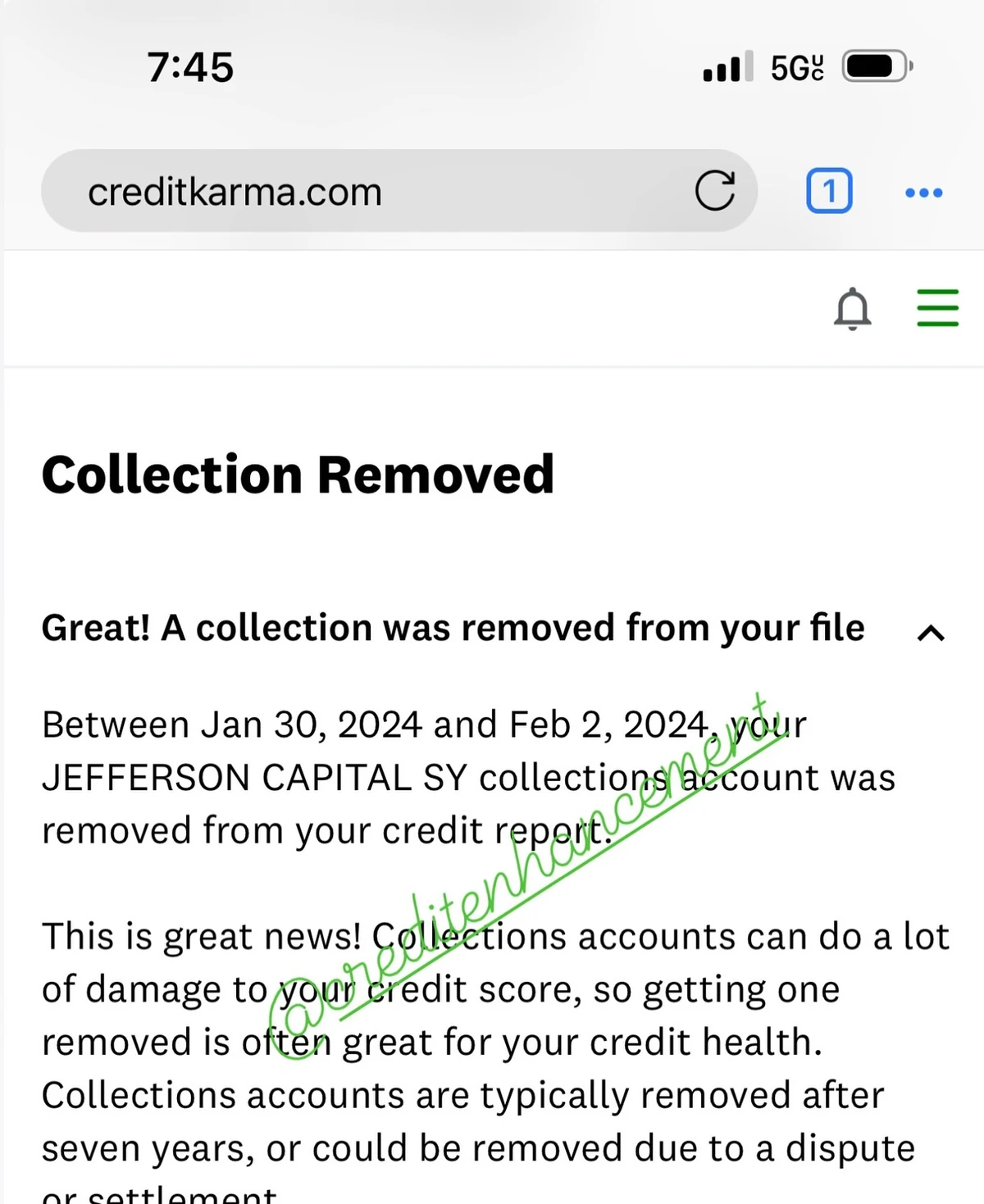
A Jefferson Capital collections account was removed from a client's credit report in February 2024.
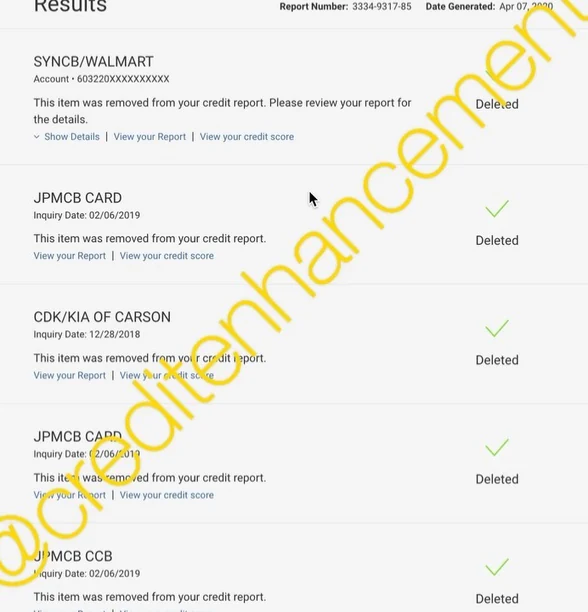
Five items — a store card account and four hard inquiries — were deleted from a client's Experian report in April 2020.
Results vary from person to person and depend on what is in each credit file. Nothing here promises a particular score increase or deletion.
Identity theft is hard to deal with until you can see exactly what the bureaus are reporting — every account, every inquiry, and which ones aren't yours. The fraudulent entries hide among the real ones.
For a dollar, you can read your scores and entries from Equifax, Experian, and TransUnion before you decide what to do about them.
A dollar with MyScoreIQ opens 7 days of access to your scores, then $34.99 a month if you keep it. Cancel anytime.
Blocking fraudulent information takes the right documents in the right order. We help you understand each piece.
We help you go through your reports account by account and flag the ones you don't recognize — cards, loans, and collections you never opened.
We explain the identity theft report — the FTC report from IdentityTheft.gov or a police report — and what it needs to include.
We help you list the specific accounts and inquiries that match the identity theft report, so the bureau can see exactly what to block.
We talk through the proof of identity the bureaus ask for, and how to present it with the request.
We talk through whether the items and the paperwork line up for a block request under section 605B, and what to do if a bureau asks for more.
A block request works when the report, the items, and your identity all line up. We help you check the match before anything goes in.
A fraudulent account can look like an ordinary one until you compare it with your own records. We help you go through the file line by line.
Identity theft is stressful and the process is detailed. We walk through it with you, step by step, in plain language.
We talk through the accounts and inquiries showing on your credit reports and flag the ones that don't look like yours.
We explain how to file the FTC identity theft report and what details it should include.
We help you list the fraudulent accounts and inquiries that match the identity theft report.
We explain the block request, what the bureaus may ask for, and practical steps to protect your file going forward.
Section 605B of the Fair Credit Reporting Act lets you ask a credit bureau to block information that resulted from identity theft, when you provide an identity theft report, identify the items, and prove your identity.
You generally need an identity theft report, such as the FTC report from IdentityTheft.gov or a police report, a list of the fraudulent items, and proof of your identity.
You can file a report with the FTC at IdentityTheft.gov, and you can also file a report with local law enforcement. Keep copies of everything you file.
Timing varies with the bureau and the paperwork involved. We can talk through what to expect and what to do if a bureau asks for more information.
Accounts you never opened shouldn't be on your report. Let's go through what the bureaus are showing and talk about your options. Call (346) 301-6424.