Student Loan Default in Houston
Default Doesn't Have to Be the End of the Story
You went to school in Houston — University of Houston, Texas Southern, Houston Community College — to build a better life, not to end up in default. Then a missed payment turned into several, the loan went into default, and now the entry on your report is standing between you and a car, an apartment in Midtown, or a job that checks credit. Before you decide what to do, learn what default means on a report and what paths exist out of it.
A federal student loan generally goes into default after about 270 days without a payment, and the default can stay on a credit report for up to seven years. Default can also bring consequences beyond the report — wage garnishment, where part of a paycheck is taken, and tax refund offset, where a tax refund is applied to the debt. Many Houston graduates don't know that rehabilitation — a series of agreed payments — can bring the loan current again and change how the default is reported.
We help you read the student loan entries the way a bureau reads them: the servicer, the balance, the status, and the dates tied to the default. If something in an entry doesn't line up with your payment records or your loan history, it may be challenged with the reporting agency or the information provider. Accurate default information generally stays, even when it is unfavorable — so the work starts with getting the facts straight.
These are actual results from past clients, previously shared on Instagram. Every credit file is different, so treat these as examples of what the process can look like, not as a promise of what yours will do.
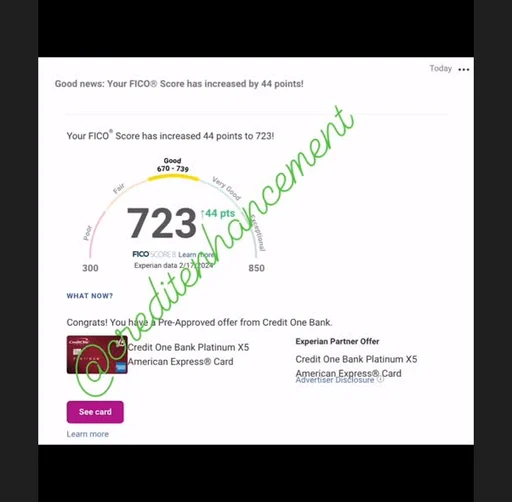
A client's Experian FICO score rose 44 points to 723 in February 2024.
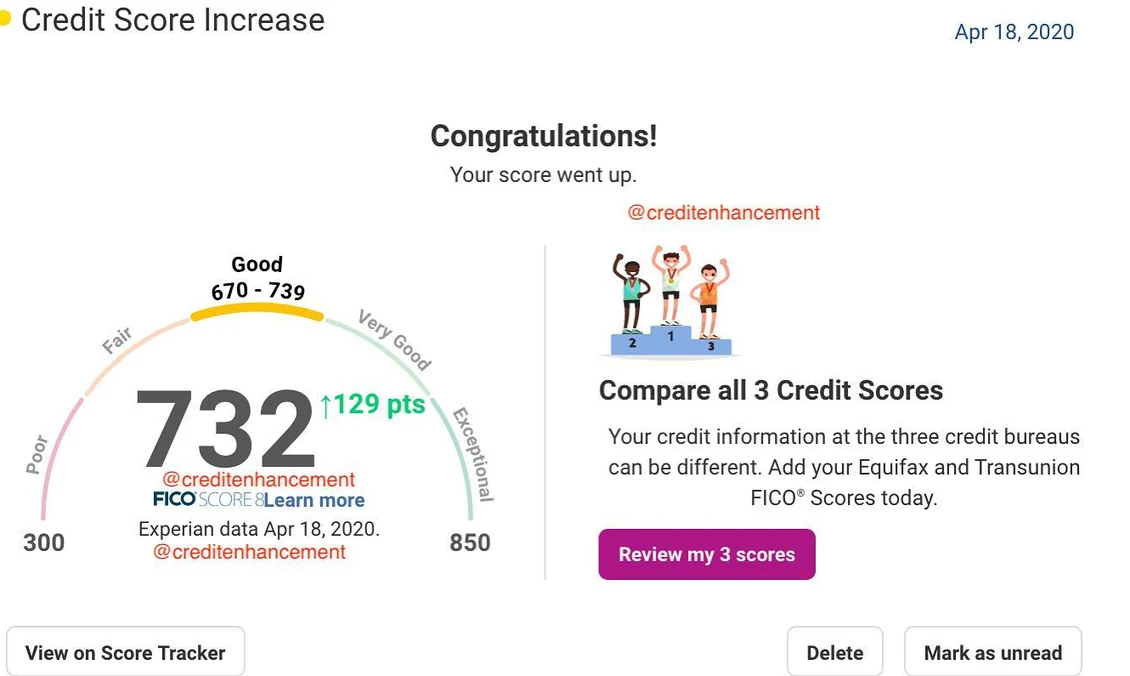
A client's Experian FICO score rose 129 points to 732 in April 2020.
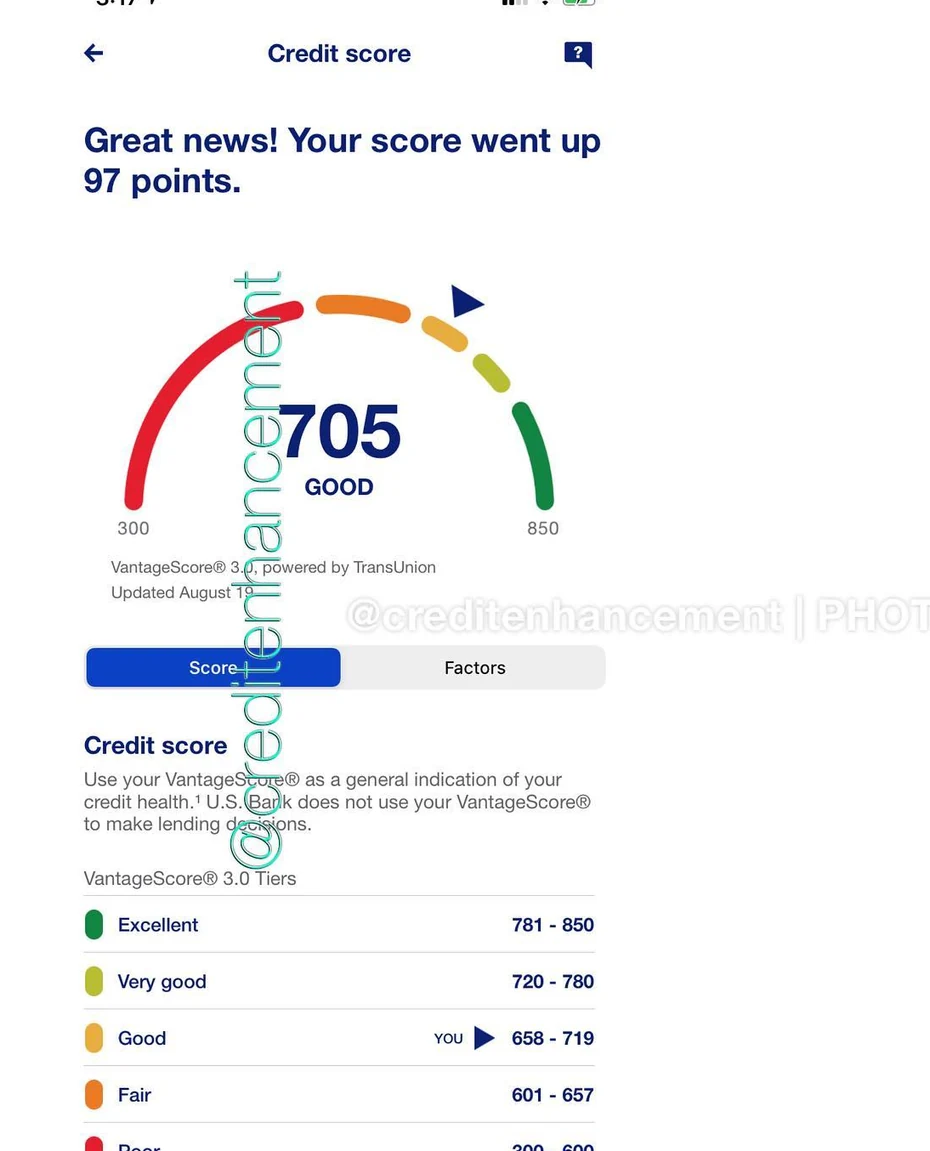
A client's TransUnion VantageScore rose 97 points to 705 in August 2020.
Results vary from person to person and depend on what is in each credit file. Nothing here promises a particular score increase or deletion.
Student loan entries are hard to deal with until you can see exactly what the bureaus are reporting — which loans are in default, the balances, and the dates. The servicer's records and the report don't always agree.
For a dollar, you can read your scores and entries from Equifax, Experian, and TransUnion before you decide what to do about them.
A dollar with MyScoreIQ opens 7 days of access to your scores, then $34.99 a month if you keep it. Cancel anytime.
Student loan default touches the report, the paycheck, and the tax refund. We help you understand each piece and spot accuracy problems.
We explain how a defaulted student loan is reported, how it differs from a loan that is simply past due, and how long it generally stays.
We talk through loan rehabilitation — the agreed payments that can bring a federal loan out of default — and what it changes on a report.
We explain how wage garnishment works with a defaulted federal loan, and what the servicer and the report should show while it is happening.
We talk through tax refund offset, where a tax refund is applied to a defaulted loan, and how the balance should be updated after it.
We talk through whether an entry has inaccurate information that may warrant a dispute with the reporting agency or the information provider.
The servicer's records and the bureaus' reports can disagree. We help you check both before you act.
Many borrowers in default don't know rehabilitation exists. We explain what it is and what it takes, in plain language.
A degree can mean several loans with different servicers. We help you sort them out instead of treating them as one big problem.
We talk through the student loan entries showing on your credit reports.
We help you review the reported servicer, balance, and status for each loan.
We help you identify information that appears inaccurate, incomplete, or inconsistent with your records.
We explain dispute options, rehabilitation, and communication with the servicer.
A federal student loan generally goes into default after about 270 days without a payment. The default is reported to the bureaus, and the loan may be sent for wage garnishment or tax refund offset.
Rehabilitation is a program where a borrower makes a series of agreed payments on a defaulted federal loan. Completing rehabilitation can bring the loan current and change how the default is reported.
The garnishment or offset itself follows the rules for defaulted federal loans, but the way the balance and status are reported may be challenged if the information is inaccurate.
A student loan default generally stays on a credit report for up to seven years from the date of first delinquency that led to the default.
A student loan in default doesn't have to stay a mystery. Let's go through what the bureaus are showing and talk about your options. Call (346) 301-6424.