Dealing With a Medical Collection
A Hospital Bill Shouldn't Follow You Around Houston
Nobody plans an emergency room visit at the Texas Medical Center or a surprise bill after a clinic visit in Pasadena. The treatment ends, the paperwork doesn't — and months later a medical bill you thought insurance handled shows up as a collection on your credit report. Before you decide what to do, learn how that entry got there and what the reporting rules say about it.
Medical debt reaches collections in ways other bills don't: a claim denied, a bill sent to an old address in the Third Ward, a balance that changed after insurance finally paid part of it. The reporting rules have also changed for medical debt — paid medical collections are removed from credit reports, and unpaid medical collections under $500 are excluded. So a medical entry that is still showing after you paid it, or a small unpaid balance that shouldn't be listed at all, is worth a careful look.
We help you read the medical collection entry the way a bureau reads it: the original provider, the collection agency, the balance, and the dates tied to it. If something in the entry doesn't line up with your bills, your insurance explanation of benefits, or the current reporting rules, it may be challenged with the reporting agency or the information provider. Accurate medical collection information generally stays, even when it is unfavorable.
These are actual results from past clients, previously shared on Instagram. Every credit file is different, so treat these as examples of what the process can look like, not as a promise of what yours will do.

A client's scores rose on all three bureaus in May 2020: Experian up 63 points to 666, Equifax up 50 to 703, and TransUnion up 51 to 695.
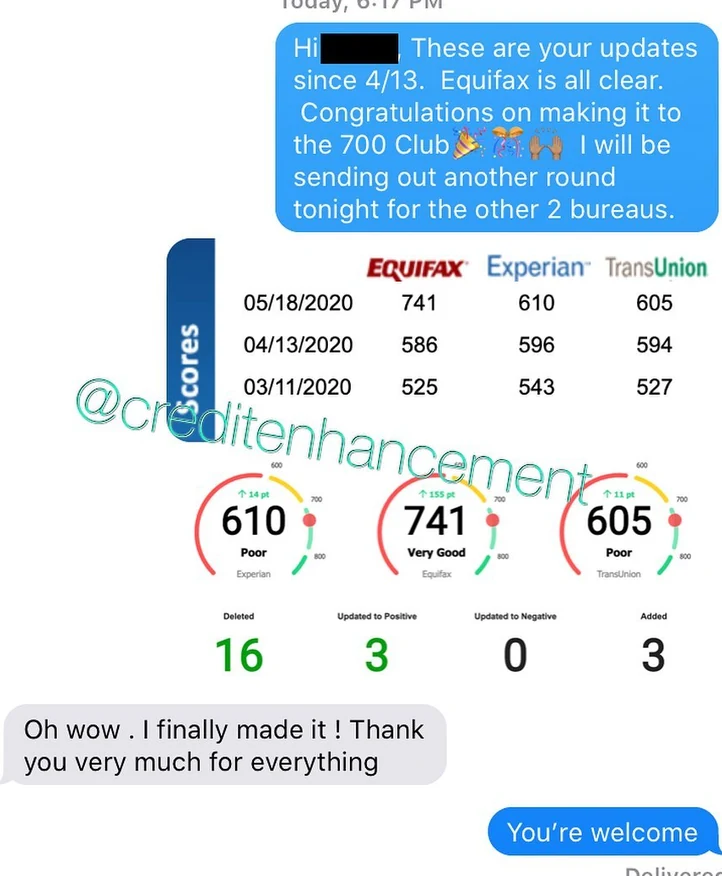
A client's Equifax score climbed from 525 in March 2020 to 741 in May 2020, with 16 items deleted along the way.
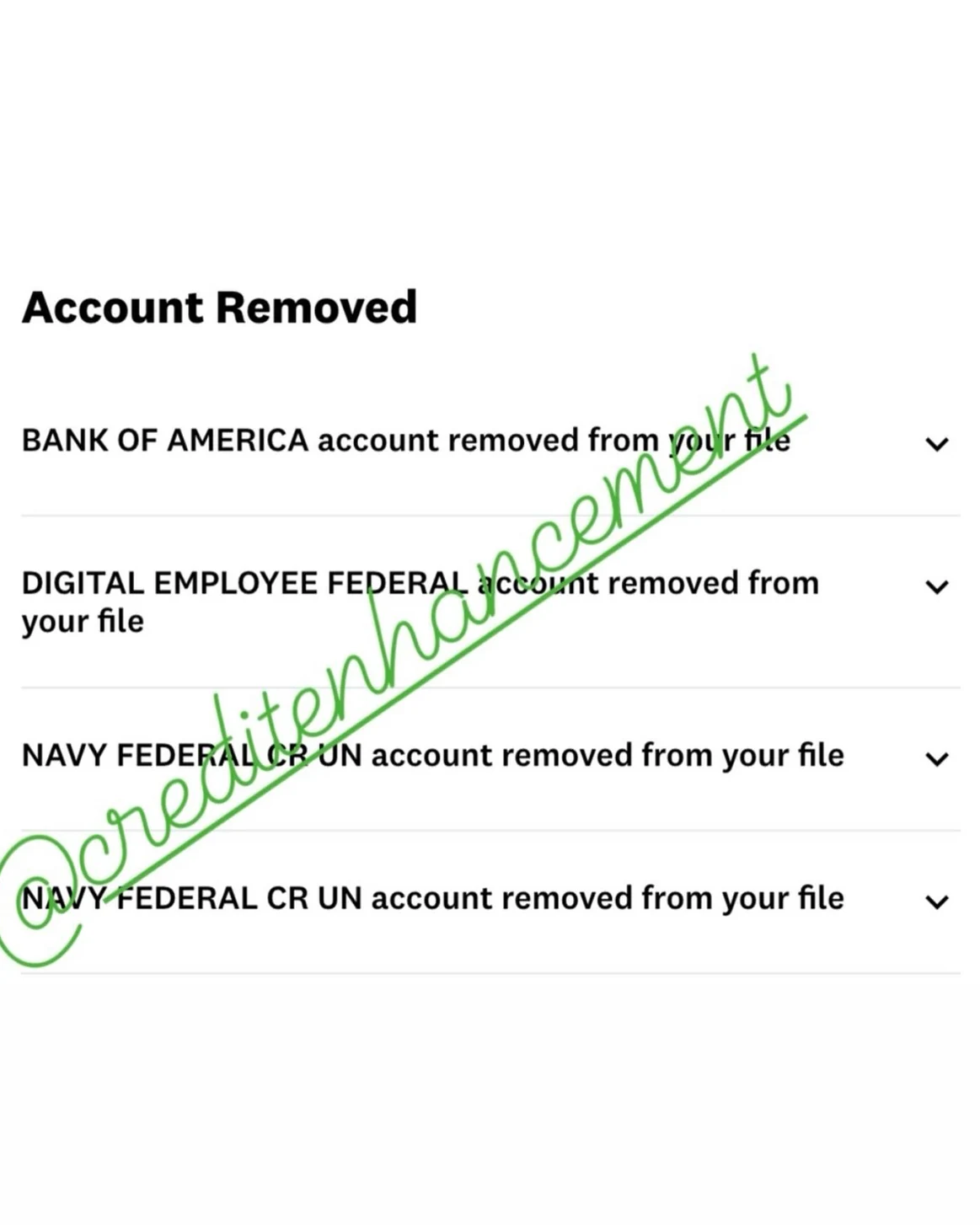
Four accounts removed from a client's file in February 2024: Bank of America, Digital Employee Federal, and two Navy Federal accounts.
Results vary from person to person and depend on what is in each credit file. Nothing here promises a particular score increase or deletion.
A medical collection is hard to deal with until you can see exactly what the bureaus are reporting — the balance, the agency, and whether the entry matches the bill you actually received. Your insurance paperwork and the report don't always agree.
For a dollar, you can read your scores and entries from Equifax, Experian, and TransUnion before you decide what to do about them.
A dollar with MyScoreIQ opens 7 days of access to your scores, then $34.99 a month if you keep it. Cancel anytime.
Medical collections have their own reporting rules. We help you understand them and spot accuracy problems.
We review the original provider, the collection agency, and the path the bill took from the hospital or clinic to your report.
We talk through the rule that paid medical collections are removed from credit reports, and what to check when a paid account is still showing.
We explain that unpaid medical collections under $500 are excluded from credit reports, and what to look for when a small balance still appears.
We help you compare the reported balance with your insurance explanation of benefits and the bills you received.
We talk through whether an entry has inaccurate information that may warrant a dispute with the reporting agency or the information provider.
One visit can produce bills from the hospital, the doctor, and the lab. We help you sort out which bill the collection actually belongs to.
Paid medical collections are removed, and small unpaid ones are excluded. We help you check whether your entry follows those rules.
Bills, insurance letters, and payment receipts are the evidence. We help you line them up against the report.
We talk through the medical collection entries showing on your credit reports.
We help you review the reported balance, the original provider, and the dates tied to the entry.
We help you identify information that appears inaccurate, incomplete, or inconsistent with your records.
We explain dispute options, communication with the provider or collector, and practical credit habits.
Paid medical collections are removed from credit reports under current reporting rules. If a medical collection you paid is still showing, the entry may be challenged with the reporting agency or the information provider.
Unpaid medical collections under $500 are excluded from credit reports. If a small unpaid medical balance is still listed, it is worth checking against the reporting rules.
If insurance paid part or all of a bill and the collection balance doesn't reflect that, the reported amount may be inaccurate. We can talk through the records that help support a factual dispute.
If the medical collection entry has inaccurate information, it may be challenged with the reporting agency or the information provider. Accurate medical collection information generally stays, even when it is unfavorable.
A medical bill on your report doesn't have to stay a mystery. Let's go through what the bureaus are showing and talk about your options. Call (346) 301-6424.