Consumer Protection Laws
Four laws protect you in credit repair: the FCRA, the FDCPA, CROA, and FACTA. Here is what each one actually does for you, in plain English.
Four federal laws do most of the work in credit repair. The Fair Credit Reporting Act governs what can be on your reports and how disputes work. The Fair Debt Collection Practices Act governs how collectors can treat you. The Credit Repair Organizations Act governs what credit repair companies can and cannot do. The Fair and Accurate Credit Transactions Act added your rights to see your reports and to put fraud alerts on your file.
This is legal information, not legal advice. These laws are the reason you have rights in the first place, and knowing them helps you spot when a bureau, a collector, or a company is not following them.
The rights that matter most in practice are the ones you will actually use. The right to dispute and to have the dispute investigated is the core of credit repair. The right to debt validation is the core of dealing with collectors. The right to a written contract and a three-day cancellation window is the core of hiring a company safely. And the rule that a company cannot charge before it does work is the single best test of whether a company is legitimate.
If a bureau, a collector, or a company violates one of these laws, you have options. You can complain to the Consumer Financial Protection Bureau, which handles complaints about bureaus and collectors. You can complain to the Federal Trade Commission, which enforces CROA. And you can talk to a consumer attorney, many of whom take these cases on a contingency basis.
If this guide helped, these pages go deeper on the topics that usually come up next.
These are actual results from past clients, previously shared on Instagram. Every credit file is different, so treat these as examples of what the process can look like, not as a promise of what yours will do.
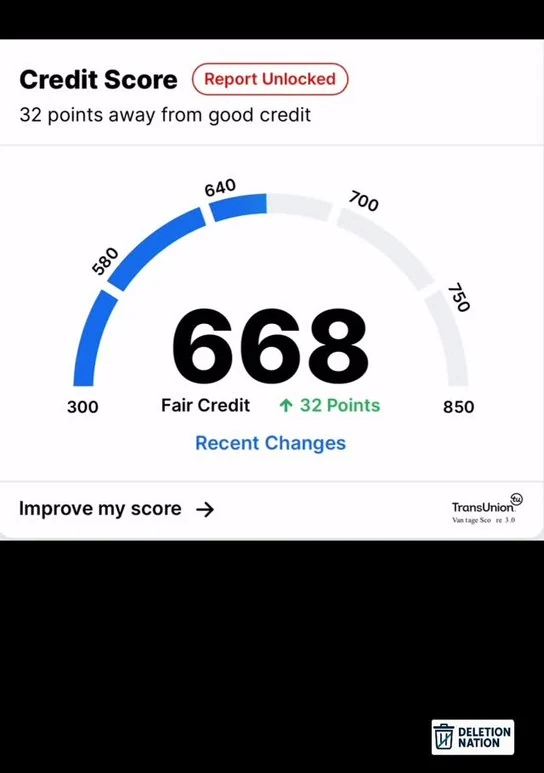
Three TransUnion clients cleared back to back in August 2025. One client had 8 inquiries deleted in a single sweep; another had Apple Card, Comenity, CareCredit, and USAA accounts removed; a third had a Synchrony account deleted. One client rose 32 points overnight, to 668.
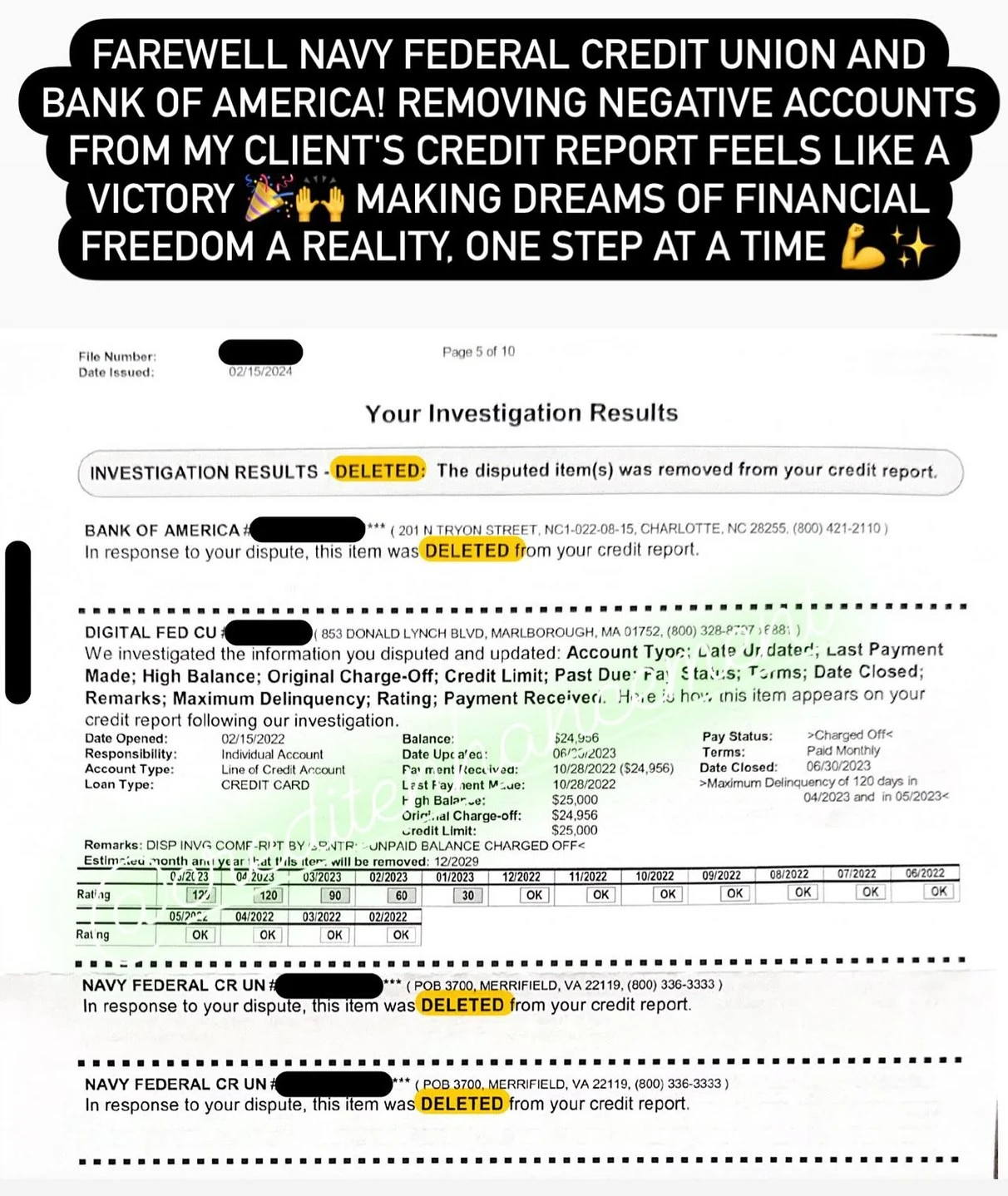
A February 2024 bureau investigation letter showing a Bank of America account and two Navy Federal accounts deleted from a client's credit report after dispute.
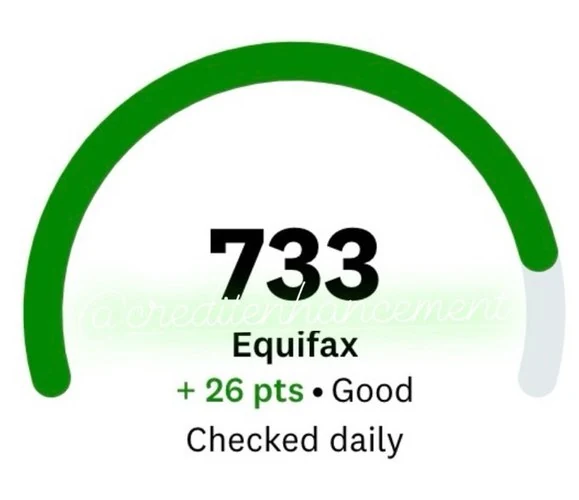
A client reached 733 on Equifax after a 26-point increase, March 2024.
Results vary from person to person and depend on what is in each credit file. Nothing here promises a particular score increase or deletion.
You can't fix what you can't see. Read your scores and entries from all three bureaus side by side and find out what is actually on your reports.
For a dollar, you can read your scores and entries from Equifax, Experian, and TransUnion before you decide what to do about them.
A dollar with MyScoreIQ opens 7 days of access to your scores, then $34.99 a month if you keep it. Cancel anytime.
Consumer Protection Laws can look different from one report to the next. We help you understand the details and spot accuracy problems.
The FCRA governs credit reports. It gives you the right to see your reports, to dispute inaccurate information, and to have errors investigated. Bureaus must follow reasonable procedures to keep your file accurate, and furnishers must investigate when you dispute.
The FDCPA governs debt collectors. It gives you the right to ask a collector to prove a debt, and it limits how collectors can contact you, including a 30-day window to request validation and a right to tell a collector to stop communicating.
CROA governs credit repair companies. A company cannot charge you before it performs work, must give you a written contract, and must give you three business days to cancel. It also cannot promise to remove accurate information.
FACTA amended the FCRA. It gives you the right to a report from each bureau every 12 months, the right to place fraud alerts and credit freezes, and the right to dispute directly with furnishers.
A Consumer Protection Laws entry feels personal, but on a report it is just data — dates, amounts, and a status. We help you read it as data first.
The same account can look different on each bureau. We help you check all three before you act on any one of them.
We explain dispute options, what records to keep, and practical habits that help you stay current going forward.
You can dispute any information on your reports that you believe is inaccurate, and the bureau must investigate. See our guide on how to dispute a credit report error.
You can ask a collector to prove a debt is yours. The collector must pause collection until it provides validation.
A credit repair company must give you a written contract before it does any work, and you have three business days to cancel it.
A company cannot charge you before it performs work. Anyone who asks for payment upfront is breaking the law.
The Fair Credit Reporting Act governs credit reports. It gives you the right to see your reports, to dispute inaccurate information, and to have errors investigated. See the glossary for the full definition.
The Fair Debt Collection Practices Act governs debt collectors. It gives you the right to ask a collector to prove a debt and limits how collectors can contact you.
The Credit Repair Organizations Act governs credit repair companies. A company cannot charge you before it performs work, must give you a written contract, and must give you three business days to cancel.
The Fair and Accurate Credit Transactions Act amended the FCRA. It gives you the right to a report from each bureau every 12 months and the right to place fraud alerts and credit freezes.
You can complain to the Consumer Financial Protection Bureau or the Federal Trade Commission, and you can talk to a consumer attorney. See our guides on the CFPB and the FTC.
Let's look at your reports together and find the moves that will actually help — and the ones that won't. Call (346) 301-6424.