Dealing With a Late Payment

How to Remove a Late Payment From Your Credit Report in Houston, Texas

One Late Payment Shouldn't Define Your Credit for Years

Houston runs on tight schedules — refinery shifts out in Baytown, rotations at the Medical Center, long drives down I-10 from Katy. One payment slips past its due date, the servicer reports it late, and suddenly a lease in the Heights or a mortgage in Pearland feels out of reach. Before you decide what to do, learn what that entry actually says — and whether the details in it are right.

First, Understand What You're Actually Dealing With

A late payment usually shows up after an account goes 30 days or more past due, and the mark can stay on a credit report for up to seven years. It can raise the cost of a car loan on I-45, complicate an apartment application in Montrose, or slow down a home purchase in Cypress — and it stings most when the payment was made, the amount was wrong, or the date on the report doesn't match your bank records.

Start by pulling your reports from Equifax, Experian, and TransUnion at annualcreditreport.com, the official site. Read each late payment entry closely: the creditor, the date of the late payment, how many days late it was marked, the balance, and the account status. The same late payment can look different from one bureau to the next, and those differences matter. If the entry is inaccurate — the wrong date, the wrong number of days late, an account that was actually paid on time — it can be challenged with the bureau or with the creditor that reported it.

Accurate late payment information generally stays on a report for up to seven years, even when it is unfavorable. That is the rule that shapes everything else on this page: the work is about accuracy first, and about courtesy requests second. No one can promise to remove an accurate late payment, and anyone who does is not describing how the system works.

Step by Step: Challenging a Late Payment

Step 1 — Gather your proof. Before you write anything, collect bank statements, payment confirmations, and any correspondence showing when you paid and how much. If a payment was made on time but posted late, the bank record is the centerpiece of the dispute.

Step 2 — Compare all three bureaus. Write down exactly what each bureau shows for the same account. A 30-day late on one report and a 60-day late on another is a discrepancy worth disputing, because at least one of them is wrong.

Step 3 — Dispute the inaccurate detail. You can dispute online through the bureau, or by mail. A mailed dispute should name the account, state the specific error in plain language, and include copies (never originals) of your supporting documents. Ask the bureau to investigate and correct the entry.

Step 4 — Give it 30 days. Bureaus generally have 30 days to investigate a dispute. They contact the creditor, review what comes back, and send you the results in writing. If the entry is corrected or removed, check all three reports again — a correction at one bureau does not always flow to the other two.

Step 5 — If the entry is accurate, consider a goodwill letter. A goodwill letter asks the creditor for a courtesy removal of an accurate late payment. It works best for a one-off late payment on an account with an otherwise on-time history, and it works best when you have stayed current since. There is no obligation for the creditor to agree, and a polite, specific request with a short explanation of what happened stands a better chance than a form letter sent to a general inbox.

What to Expect, and What Not to Expect

A dispute over an inaccurate late payment can resolve in a few weeks if the records are clear. A goodwill request can take longer, and many creditors never answer at all — silence is a common outcome, and a second letter a month later is a reasonable follow-up. Neither path comes with a guaranteed result, and neither one changes your score on a set schedule.

While you wait, the most useful habit is the simplest one: pay every account on time from here on. Payment history is the largest single factor in most scoring models, and new on-time payments slowly dilute the weight of an old late mark. Setting up autopay for at least the minimum on every account — credit cards, auto loans, the mortgage — stops a second late payment from landing while the first one is still aging. In Houston, where a long commute and a shift schedule can make a due date easy to miss, autopay and calendar reminders do more for a credit file than any letter ever will.

When you dispute by mail, send it to the bureau that shows the item. The mailing addresses are: Experian, P.O. Box 4500, Allen, TX 75013; Equifax, P.O. Box 740256, Atlanta, GA 30374; and TransUnion, P.O. Box 2000, Chester, PA 19016. Bureaus generally have 30 days to investigate a dispute once they receive it. Send disputes by certified mail and keep a copy of everything you send, along with the delivery confirmation.

Related Guides and Services

If this guide helped, these pages go deeper on the topics that usually come up next.

A First Look at Real Results

These are actual results from past clients, previously shared on Instagram. Every credit file is different, so treat these as examples of what the process can look like, not as a promise of what yours will do.
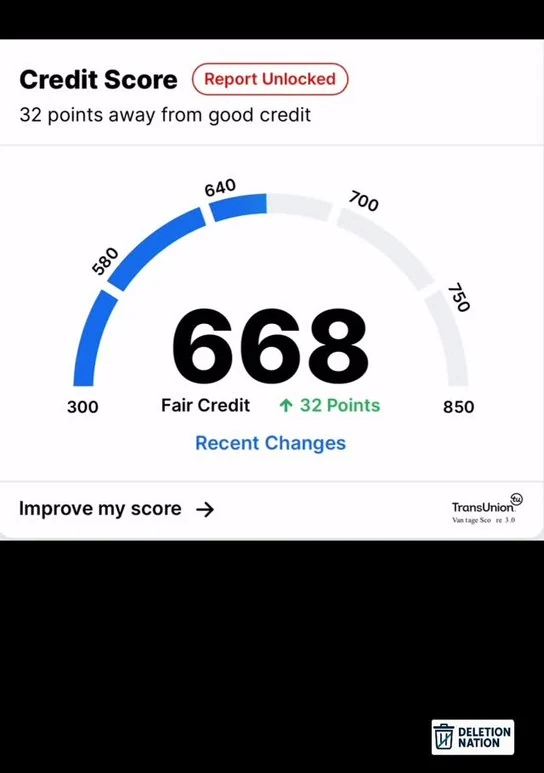
Houston credit repair result: TransUnion credit score of 668, up 32 points

Three clients, 13 deletions, one round

Three TransUnion clients cleared back to back in August 2025. One client had 8 inquiries deleted in a single sweep; another had Apple Card, Comenity, CareCredit, and USAA accounts removed; a third had a Synchrony account deleted. One client rose 32 points overnight, to 668.
See it on Instagram →

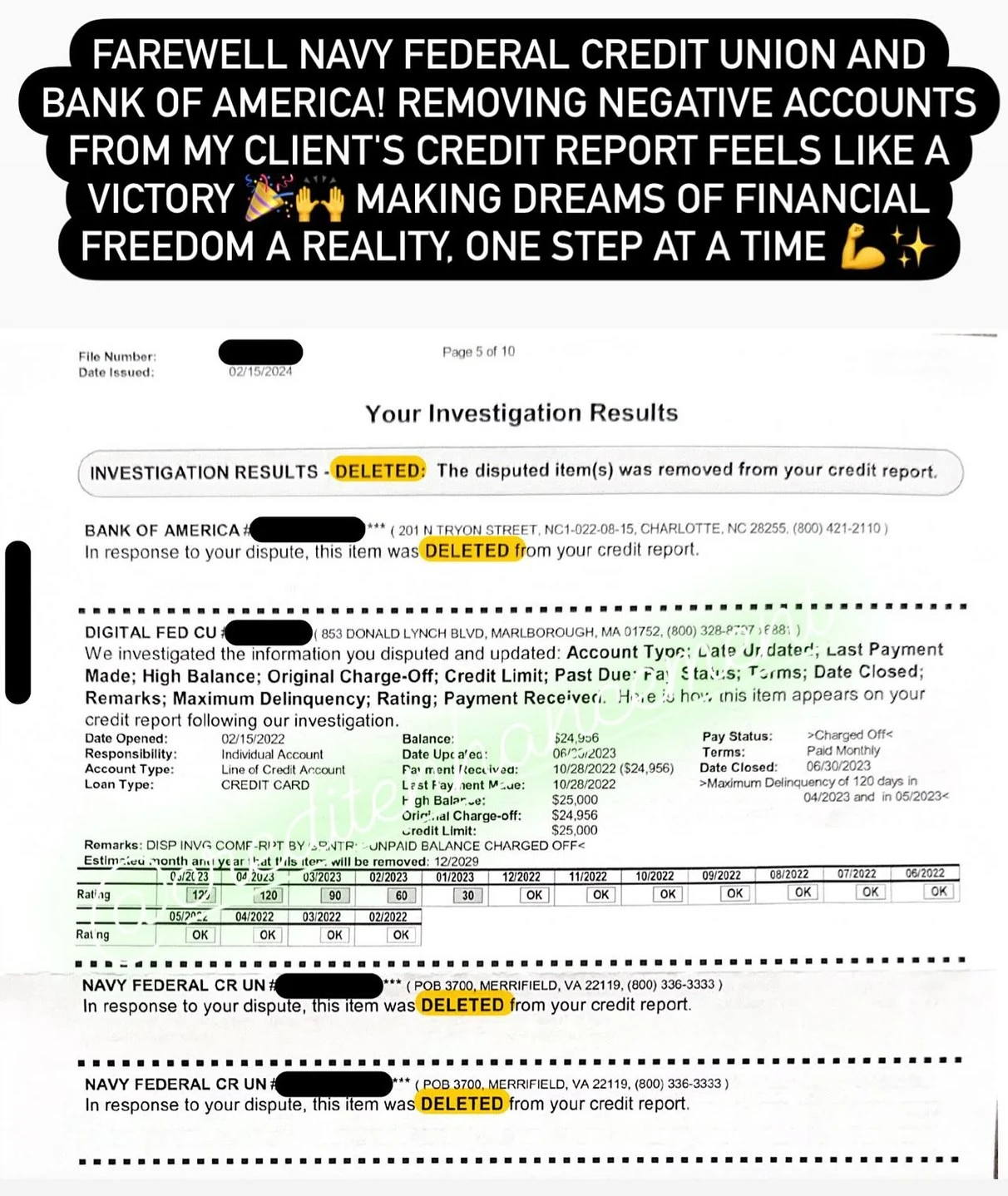
Houston credit repair result: Credit bureau investigation letter showing Bank of America and Navy Federal accounts deleted

Bank of America and Navy Federal, deleted

A February 2024 bureau investigation letter showing a Bank of America account and two Navy Federal accounts deleted from a client's credit report after dispute.
See it on Instagram →

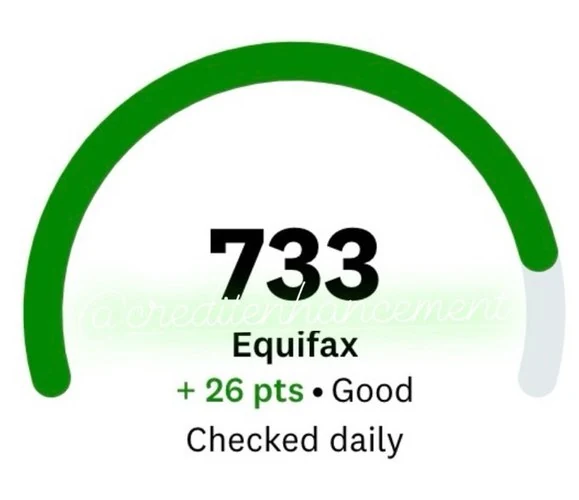
Houston credit repair result: Equifax credit score of 733, up 26 points

Equifax up 26 points

A client reached 733 on Equifax after a 26-point increase, March 2024.

See it on Instagram →

Results vary from person to person and depend on what is in each credit file. Nothing here promises a particular score increase or deletion.

See the Late Payments on Your Reports for a Dollar

You can't challenge what you can't see. A late payment that shows up as 60 days late on one bureau and 30 days late on another is worth a close look — but only if you can read the entries side by side first.

For a dollar, you can read your scores and entries from Equifax, Experian, and TransUnion before you decide what to do about them.

See What's on My Reports

A dollar with MyScoreIQ opens 7 days of access to your scores, then $34.99 a month if you keep it. Cancel anytime.

Houston Credit Repair Is Proud to Serve Texas

What We Walk Through With You

Late Payments can look different from one report to the next. We help you understand the details and spot accuracy problems.

How the Late Payment Is Reported

We review whether the entry shows 30, 60, or 90 days late, and how the account status is described on each bureau's report.

The Date and the Days Late

We help you check the reported date of the late payment against your own payment records and bank statements.

Which Bureau Shows What

We compare the entry across Equifax, Experian, and TransUnion, because the same late payment can be reported differently by each one.

Payments You Actually Made on Time

We talk through how to document a payment that went through on time, or a payment the servicer applied to the wrong date.

When a Challenge Makes Sense

We talk through whether an entry has inaccurate information that may warrant a dispute with the reporting agency or the information provider.

Why Talk Through Late Payments With Us?

Start With the Facts

A Late Payments entry feels personal, but on a report it is just data — dates, amounts, and a status. We help you read it as data first.

One Entry, Three Reports

The same account can look different on each bureau. We help you check all three before you act on any one of them.

A Plan You Can Follow

We explain dispute options, what records to keep, and practical habits that help you stay current going forward.

How We Help With Late Payments

Go Over Your Late Payment Entries

We talk through the late payment entries showing on your credit reports.

Check Dates and Amounts

We help you review the reported dates, the days late, and the account balance tied to the entry.

Spot What May Be Wrong

We help you identify information that appears inaccurate, incomplete, or inconsistent with your records.

Talk About Next Steps

We explain dispute options, goodwill letters, and practical credit habits.

Questions About Late Payments

Can a late payment come off my credit report?

If the late payment entry has inaccurate information, it may be challenged with the reporting agency or the information provider. Accurate late payment information generally stays for up to seven years from the date of the late payment.

Does paying the account change the late payment entry?

Paying the account may change its current status, but it doesn't automatically change the history of the late payment. The reporting rules decide how long accurate information stays.

What if I paid on time but the report still shows late?

If your records show a payment was made on time and the report says otherwise, that mismatch is worth documenting. Bank statements and payment confirmations help support a factual dispute.

How long does a late payment stay on my report?

A late payment generally stays on a credit report for up to seven years from the date of the late payment, even if the account is later brought current.

What is a goodwill letter?

A goodwill letter asks a creditor for a courtesy removal of an accurate late payment. It works best for a one-off late payment with an otherwise on-time history, and the creditor is under no obligation to agree.

How long does a dispute take?

Bureaus generally have 30 days to investigate a dispute once they receive it, and they send the results in writing.

Ready to Look at That Late Payment Closely?

A late payment on your report doesn't have to stay a mystery. Let's go through what the bureaus are showing and talk about your options. Call (346) 301-6424.

Call (346) 301-6424

Our Services in Houston, Texas