ChexSystems
ChexSystems tracks your checking and savings account history. Banks check it before opening an account, and you can get your report and dispute errors on it.
ChexSystems is a consumer reporting agency, but it does not track loans or credit cards. It tracks your checking and savings accounts: accounts you opened, accounts closed for cause, unpaid negative balances, overdrafts, and suspected fraud. When you apply to open a bank account, the bank often checks your ChexSystems report first.
A negative ChexSystems record can keep you from opening a bank account, even if your credit reports look fine. The good news is that ChexSystems is covered by the same law as the big three bureaus, the Fair Credit Reporting Act, which means you have the right to see your report and to dispute anything that is wrong.
Most negative ChexSystems information stays on your report for five years. That is shorter than the seven years for most credit report items, but five years without a bank account is still a long time. If an entry is wrong, disputing it is worth the effort. If it is accurate, the main fix is time, plus asking the bank whether it will remove a paid balance early.
Some banks offer second-chance checking accounts for people with a ChexSystems record. These accounts often have higher fees or fewer features, but they let you bank while the record ages off. If a bank turns you down, ask whether it offers a second-chance account, and ask what is on your ChexSystems report so you know what to work on.
If this guide helped, these pages go deeper on the topics that usually come up next.
These are actual results from past clients, previously shared on Instagram. Every credit file is different, so treat these as examples of what the process can look like, not as a promise of what yours will do.
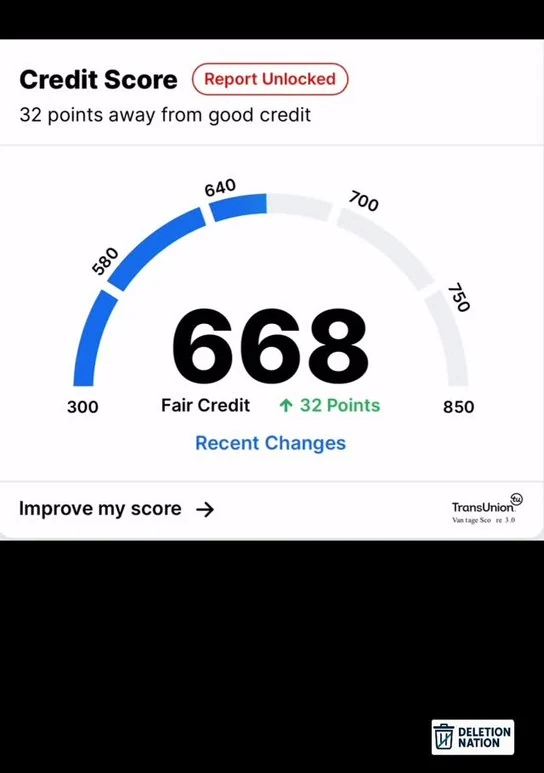
Three TransUnion clients cleared back to back in August 2025. One client had 8 inquiries deleted in a single sweep; another had Apple Card, Comenity, CareCredit, and USAA accounts removed; a third had a Synchrony account deleted. One client rose 32 points overnight, to 668.
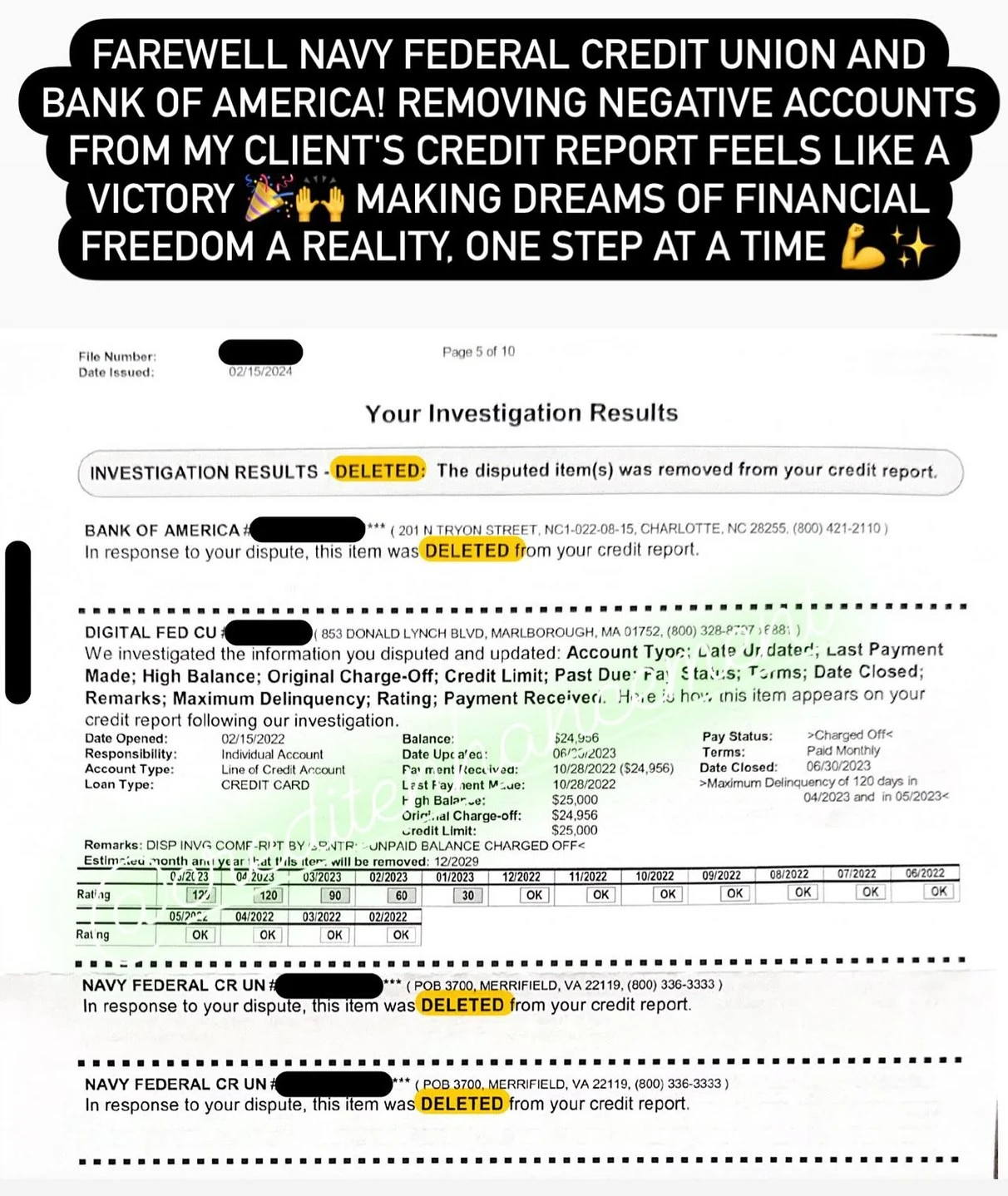
A February 2024 bureau investigation letter showing a Bank of America account and two Navy Federal accounts deleted from a client's credit report after dispute.
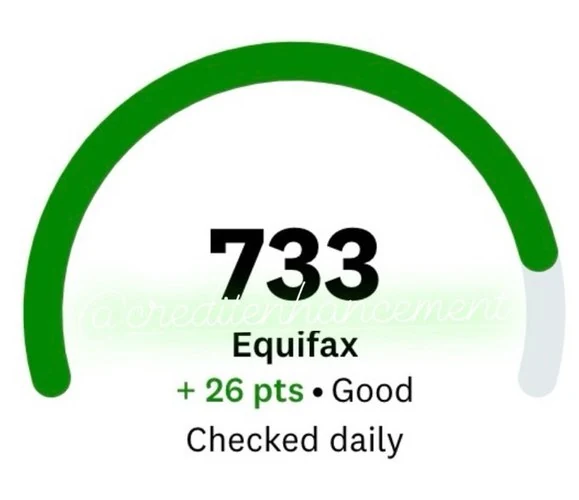
A client reached 733 on Equifax after a 26-point increase, March 2024.
Results vary from person to person and depend on what is in each credit file. Nothing here promises a particular score increase or deletion.
You can't fix what you can't see. Read your scores and entries from all three bureaus side by side and find out what is actually on your reports.
For a dollar, you can read your scores and entries from Equifax, Experian, and TransUnion before you decide what to do about them.
A dollar with MyScoreIQ opens 7 days of access to your scores, then $34.99 a month if you keep it. Cancel anytime.
ChexSystems can look different from one report to the next. We help you understand the details and spot accuracy problems.
Your checking and savings account history, including accounts closed for cause, unpaid negative balances, overdrafts, and fraud flags reported by banks.
Request your ChexSystems report at chexsystems.com or by phone or mail. Under the Fair Credit Reporting Act you can get one every 12 months.
Check each entry for accuracy: the bank, the account, the amount, and the dates. An old paid balance or an account that is not yours should stand out.
Send a written dispute to ChexSystems describing the error and including copies of any proof. ChexSystems generally has 30 days to investigate.
You can also dispute directly with the bank that reported the information. The bank must investigate and correct what is wrong.
A ChexSystems entry feels personal, but on a report it is just data — dates, amounts, and a status. We help you read it as data first.
The same account can look different on each bureau. We help you check all three before you act on any one of them.
We explain dispute options, what records to keep, and practical habits that help you stay current going forward.
Knowing what is on your ChexSystems report before you walk into a bank keeps you from being surprised by a denial.
If you paid off a negative balance, keep the receipt. It is the proof you need if the entry still shows as unpaid.
A written dispute creates a paper trail and starts the investigation clock. Keep copies of everything you send.
If a balance is paid, the bank that reported it can ask ChexSystems to remove the entry early. It is not required to, but it is worth asking.
ChexSystems is a consumer reporting agency that tracks checking and savings account history: accounts closed for cause, unpaid negative balances, overdrafts, and fraud flags. Banks check it before opening accounts.
Request it at chexsystems.com or by phone or mail. Under the Fair Credit Reporting Act you can get one every 12 months.
Most negative information stays on your ChexSystems report for five years.
Yes. Send a written dispute to ChexSystems, and you can also dispute directly with the bank that reported the information. ChexSystems generally has 30 days to investigate.
It is harder, but some banks offer second-chance checking accounts for people with a ChexSystems record. Ask the bank what options it has.
Let's look at your reports together and find the moves that will actually help — and the ones that won't. Call (346) 301-6424.