Credit Freezes

How to Freeze Your Credit and When You Should in Houston, Texas

A Freeze Is the Strongest Lock You Can Put on Your File

A credit freeze stops anyone — including you — from opening a new account in your name until you lift it. It costs nothing to place, it doesn't hurt your score, and it is the single most effective step you can take after identity theft or a data breach. Here's how it works and when to use it.

What a Credit Freeze Actually Does

A credit freeze blocks access to your credit report. When a lender tries to pull your report to open a new account, the bureau refuses — and without the report, the lender cannot approve the account. That is the whole mechanism, and it is very effective: a thief with your Social Security number, your address, and your date of birth still cannot open a credit card in your name if your file is frozen, because the lender cannot see the file.

A freeze does not affect your credit score, and it does not affect your existing accounts. Your credit cards keep working, your mortgage and auto loan payments continue as normal, and you can still check your own credit report — a freeze blocks other people's access, not yours. It also does not stop all uses of your information: it does not prevent tax refund fraud, medical identity theft, or the misuse of an existing account. It is a lock on new credit, and within that job it is the strongest one available.

Placing a freeze is a right under federal law, and the bureaus cannot charge you for it. You place a separate freeze with each bureau — Equifax, Experian, and TransUnion — and you lift it separately with each one too. A freeze with only one bureau leaves the other two open, and a lender that pulls the unfrozen bureau can still approve an account.

How to Place a Freeze, Step by Step

Step 1 — Go to each bureau's freeze page. Each bureau has an online freeze page and a phone line. Online is fastest: you create an account, verify your identity, and place the freeze in a few minutes. You can also freeze by phone or by mail if you prefer, though mail is slower.

Step 2 — Verify your identity. The bureau will ask for your name, address, date of birth, and Social Security number, and may ask questions drawn from your credit file — a previous address, a past lender — to confirm you are who you say you are. Answering those questions is part of the process, not a problem.

Step 3 — Save your PIN or password. Each bureau gives you a PIN or a password to manage the freeze. Save it somewhere safe — a password manager, a written note in a secure place — because you will need it to lift the freeze later. If you lose it, the bureau has a recovery process, but it takes time.

Step 4 — Do all three bureaus. Freeze Equifax, Experian, and TransUnion. Skipping one leaves a gap, and the gap is the one a thief will find. While you are at it, consider freezing your reports with the smaller bureaus too — Innovis and the National Consumer Telecom and Utilities Exchange — though the big three cover the credit accounts that matter most.

Step 5 — Lift it when you need credit. When you apply for a credit card, a car loan, an apartment in Houston, or a mortgage, lift the freeze temporarily — you can lift it for a specific lender or for a set number of days — and then put it back. Lifting online or by phone usually takes effect within an hour; lifting by mail can take days, so plan ahead when you know an application is coming.

Freeze vs Fraud Alert: Which One Fits

A fraud alert is the lighter option. It tells lenders to take extra steps to verify your identity before opening an account — usually by calling you at a number you provide. It lasts one year (or seven years for an extended fraud alert after identity theft), and you only need to place it with one bureau, which notifies the other two. A fraud alert is a good choice when you want protection but expect to apply for credit often, because it does not block applications the way a freeze does.

A freeze is the stronger option, and it is the better choice after identity theft, after a data breach that exposed your Social Security number, or any time you do not expect to apply for credit in the near future. Many Houstonians freeze their credit after a breach notice from an employer, a health insurer, or a retailer — and then lift it temporarily when they need to apply for something. That rhythm — frozen by default, lifted briefly when needed — is the most practical way to live with a freeze long-term.

If you are the parent of a minor child, you can freeze your child's credit too, and you should — children's Social Security numbers are a target for identity thieves precisely because nobody checks a child's credit for years. Contact each bureau and ask about a freeze for a minor; the process requires proof that you are the parent or guardian.

When you dispute by mail, send it to the bureau that shows the item. The mailing addresses are: Experian, P.O. Box 4500, Allen, TX 75013; Equifax, P.O. Box 740256, Atlanta, GA 30374; and TransUnion, P.O. Box 2000, Chester, PA 19016. Bureaus generally have 30 days to investigate a dispute once they receive it. Send disputes by certified mail and keep a copy of everything you send, along with the delivery confirmation.

Related Guides and Services

If this guide helped, these pages go deeper on the topics that usually come up next.

A First Look at Real Results

These are actual results from past clients, previously shared on Instagram. Every credit file is different, so treat these as examples of what the process can look like, not as a promise of what yours will do.
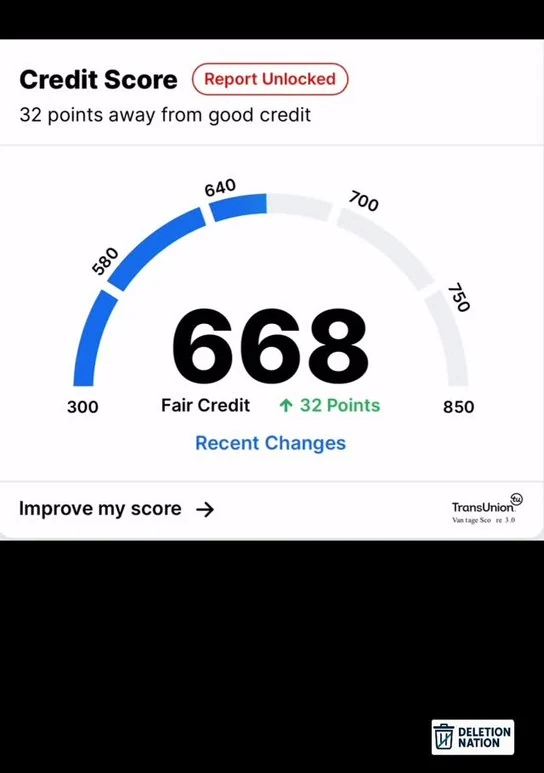
Houston credit repair result: TransUnion credit score of 668, up 32 points

Three clients, 13 deletions, one round

Three TransUnion clients cleared back to back in August 2025. One client had 8 inquiries deleted in a single sweep; another had Apple Card, Comenity, CareCredit, and USAA accounts removed; a third had a Synchrony account deleted. One client rose 32 points overnight, to 668.
See it on Instagram →

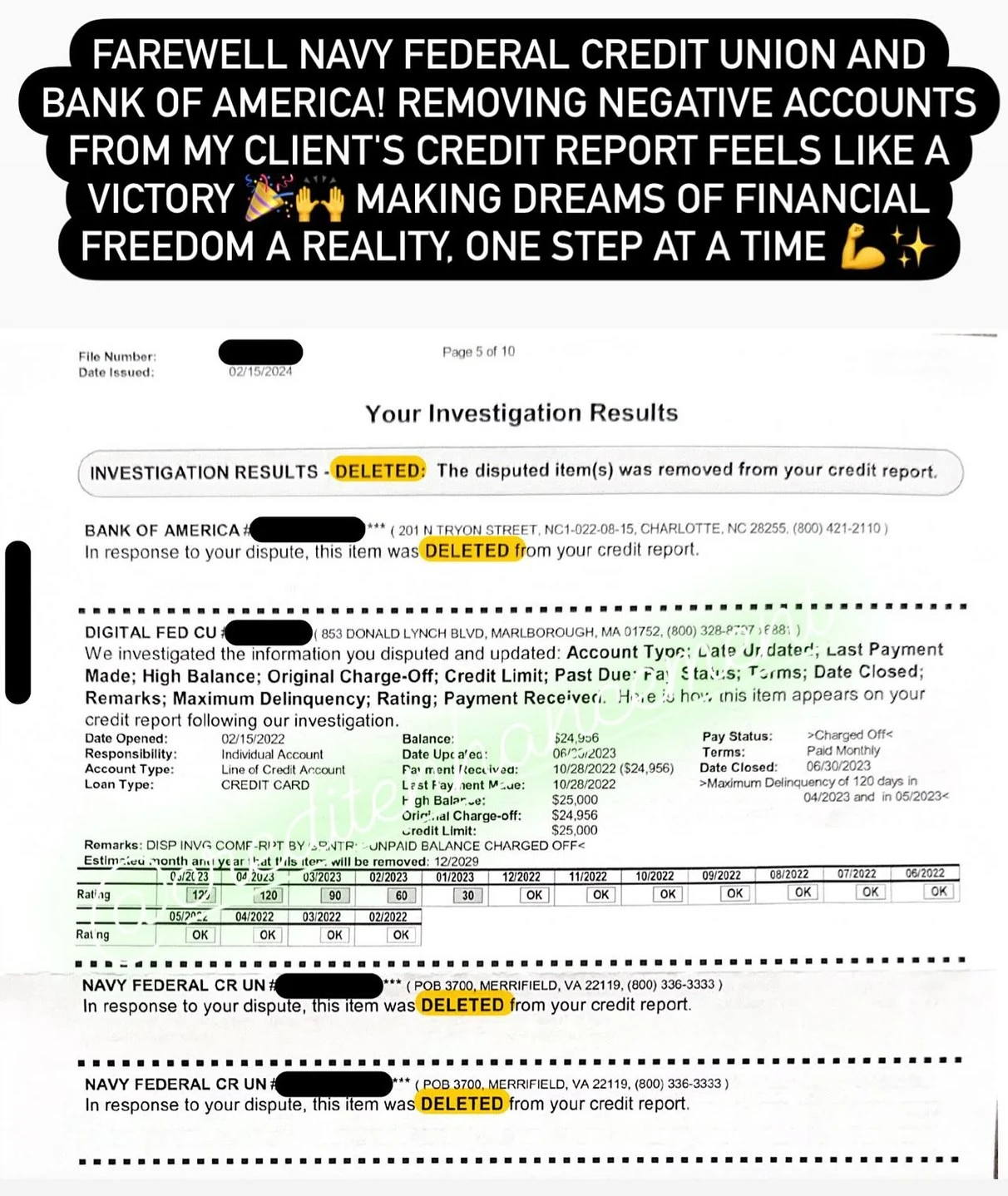
Houston credit repair result: Credit bureau investigation letter showing Bank of America and Navy Federal accounts deleted

Bank of America and Navy Federal, deleted

A February 2024 bureau investigation letter showing a Bank of America account and two Navy Federal accounts deleted from a client's credit report after dispute.
See it on Instagram →

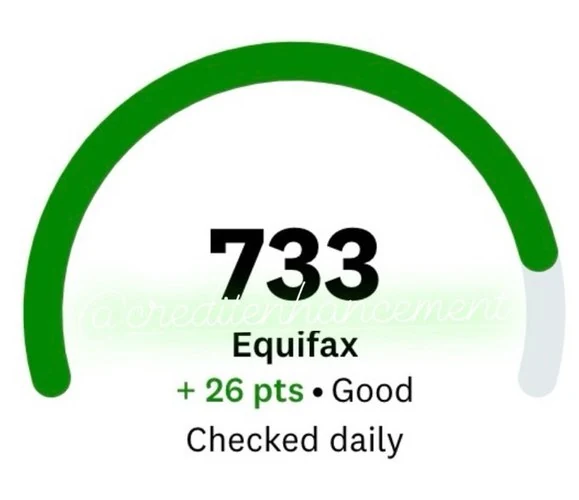
Houston credit repair result: Equifax credit score of 733, up 26 points

Equifax up 26 points

A client reached 733 on Equifax after a 26-point increase, March 2024.

See it on Instagram →

Results vary from person to person and depend on what is in each credit file. Nothing here promises a particular score increase or deletion.

Check Your Reports Before You Freeze for a Dollar

You can't protect what you haven't read. Check every account on all three reports first, then freeze — so you know exactly what you're locking down.

For a dollar, you can read your scores and entries from Equifax, Experian, and TransUnion before you decide what to do about them.

See What's on My Reports

A dollar with MyScoreIQ opens 7 days of access to your scores, then $34.99 a month if you keep it. Cancel anytime.

Houston Credit Repair Is Proud to Serve Texas

What We Walk Through With You

Credit Freezes can look different from one report to the next. We help you understand the details and spot accuracy problems.

What a Freeze Blocks

We explain what a credit freeze stops — and what it doesn't, like tax fraud or misuse of an existing account.

All Three Bureaus

We talk through freezing Equifax, Experian, and TransUnion, and why skipping one leaves a gap.

Your PIN or Password

We explain how to save the credentials you'll need to lift the freeze later.

Lifting It Temporarily

We explain how to lift a freeze for a specific lender or a set number of days when you apply for credit.

Freeze vs Fraud Alert

We help you decide which protection fits your situation.

Why Talk Through Credit Freezes With Us?

Start With the Facts

A Credit Freezes entry feels personal, but on a report it is just data — dates, amounts, and a status. We help you read it as data first.

One Entry, Three Reports

The same account can look different on each bureau. We help you check all three before you act on any one of them.

A Plan You Can Follow

We explain dispute options, what records to keep, and practical habits that help you stay current going forward.

How We Help With Credit Freezes

Explain the Freeze

We explain how a credit freeze works in plain language.

Walk Through Placement

We talk through placing a freeze with each bureau, step by step.

Plan for Applications

We explain how to lift a freeze temporarily when you need to apply for credit.

Check the Rest of Your File

We help you review your reports for accounts that shouldn't be there.

Questions About Credit Freezes

What does a credit freeze do?

A credit freeze blocks access to your credit report, so a lender cannot pull it to open a new account in your name. It does not affect your score or your existing accounts.

Does freezing my credit hurt my score?

No. A freeze does not affect your credit score, and it does not affect your existing credit cards, loans, or payments.

Do I need to freeze with all three bureaus?

Yes. You place a separate freeze with Equifax, Experian, and TransUnion. Freezing only one leaves the other two open.

How do I lift a freeze when I need credit?

Lift it online or by phone with the bureau — you can lift it for a specific lender or for a set number of days — then put it back afterward. Online and phone lifts usually take effect within an hour.

What is the difference between a freeze and a fraud alert?

A freeze blocks access to your report entirely. A fraud alert tells lenders to verify your identity before opening an account. A freeze is stronger; a fraud alert is more convenient if you apply for credit often.

Can I freeze my child's credit?

Yes. Parents and guardians can freeze a minor child's credit with each bureau. Children's Social Security numbers are a target for identity thieves because nobody checks them for years.

Want the Strongest Lock on Your File?

A credit freeze is the single most effective step against new-account fraud. Let's talk through placing one — and checking your reports first. Call (346) 301-6424.

Call (346) 301-6424

Our Services in Houston, Texas