Raising Your Score

How to Raise Your Credit Score Fast in Houston, Texas

There Are No Shortcuts — But Some Moves Work Faster Than Others

If your score is standing between you and a car loan, an apartment, or a mortgage in Houston, the word fast matters. The honest truth is that no single move raises a score overnight. But some actions show up on your reports within a billing cycle or two, and others quietly hold your score down for months. This guide separates the two.

What Can Actually Move a Score Quickly

The fastest real lever most people have is credit utilization — how much of your available credit you are using. Scoring models weigh it heavily, and it updates every billing cycle. If a card is near its limit, paying the balance down before the statement closes can change the reported balance within weeks, and the score often follows. The same works in reverse: a card that jumps to a high balance can pull a score down just as fast.

The second fast lever is correcting an error. A wrong balance, an account that is not yours, or a late payment you did not miss can weigh a score down until it is fixed. Disputing an inaccuracy is not a trick — it is the process the law provides, and a corrected entry updates on the next reporting cycle. Start by pulling your reports from all three bureaus at annualcreditreport.com, the official site, and reading them line by line.

A third move that can help quickly is becoming an authorized user on a family member's card — but only on a card with a long, clean history and a low balance. The account's history appears on your file, and it can add age and on-time payments. If that card carries a high balance or a missed payment, it hurts instead, so this only works with the right card and the right cardholder.

What Takes Time — and What Does Not Work

Payment history is the largest factor in most scoring models, and it is built one month at a time. A new streak of on-time payments starts helping right away, but it takes months of consistency to outweigh older late marks. There is no way around that — and anyone who promises to erase an accurate late payment is not describing how the system works.

Opening several new accounts at once to chase a quick boost usually backfires. Each application can add a hard inquiry, and new accounts lower the average age of your accounts. A single well-chosen account — a secured card, for example — can help over time. A stack of new applications in one month rarely does.

Be wary of anything sold as a fast fix: paying a company to dispute accurate items, adding yourself to a stranger's card as a tradeline, or opening accounts you do not need. The dispute process is available to you directly, and a dispute only changes an entry when the information in it is actually wrong. Accurate negative information generally stays for about seven years, and no letter changes that timeline.

When you dispute by mail, send it to the bureau that shows the item. The mailing addresses are: Experian, P.O. Box 4500, Allen, TX 75013; Equifax, P.O. Box 740256, Atlanta, GA 30374; and TransUnion, P.O. Box 2000, Chester, PA 19016. Bureaus generally have 30 days to investigate a dispute once they receive it. Send disputes by certified mail and keep a copy of everything you send, along with the delivery confirmation.

A Practical Order of Operations

First — read your reports. Pull all three at annualcreditreport.com and note every balance, every late mark, and every account you do not recognize. Write down the utilization on each card.

Second — pay down high balances. Start with the card closest to its limit. Pay it before the statement closing date if you can, so the lower balance is the one that gets reported.

Third — dispute what is wrong. For each genuine error, dispute it with the bureau that shows it, with documents attached. Keep copies of everything.

Fourth — set up autopay for at least the minimum on every account. One new late payment can undo months of progress. Autopay stops that from happening while you work on the rest.

Fifth — leave old accounts open. Closing a card you have had for years shortens your credit history and can raise your utilization overnight. Keep it open with a small recurring charge you pay off each month.

Related Guides and Services

If this guide helped, these pages go deeper on the topics that usually come up next.

A First Look at Real Results

These are actual results from past clients, previously shared on Instagram. Every credit file is different, so treat these as examples of what the process can look like, not as a promise of what yours will do.
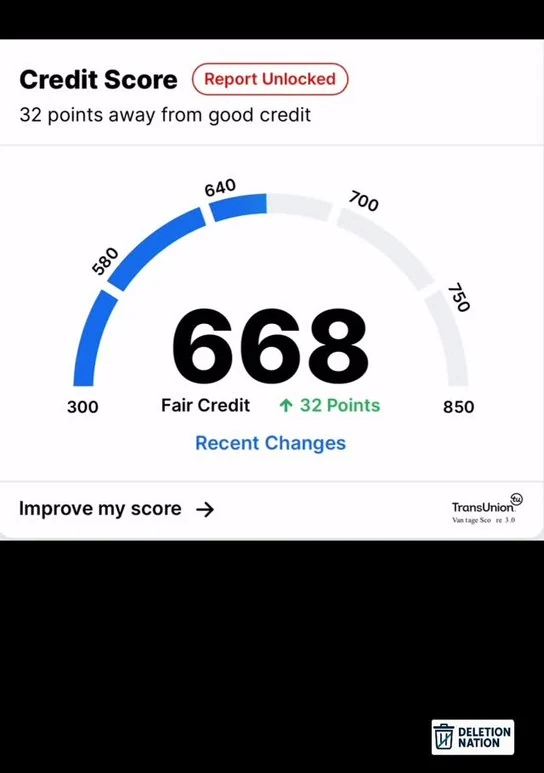
Houston credit repair result: TransUnion credit score of 668, up 32 points

Three clients, 13 deletions, one round

Three TransUnion clients cleared back to back in August 2025. One client had 8 inquiries deleted in a single sweep; another had Apple Card, Comenity, CareCredit, and USAA accounts removed; a third had a Synchrony account deleted. One client rose 32 points overnight, to 668.
See it on Instagram →

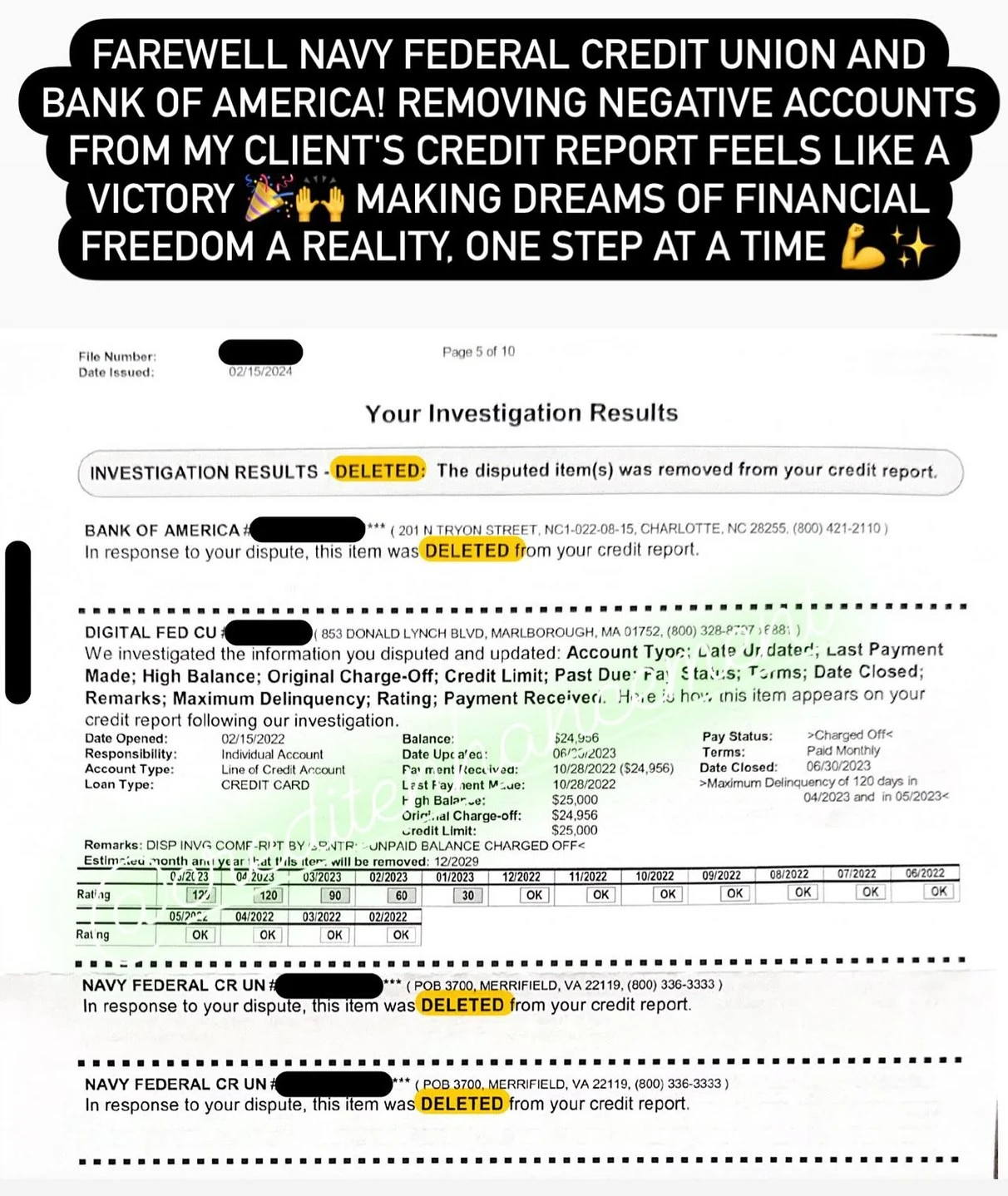
Houston credit repair result: Credit bureau investigation letter showing Bank of America and Navy Federal accounts deleted

Bank of America and Navy Federal, deleted

A February 2024 bureau investigation letter showing a Bank of America account and two Navy Federal accounts deleted from a client's credit report after dispute.
See it on Instagram →

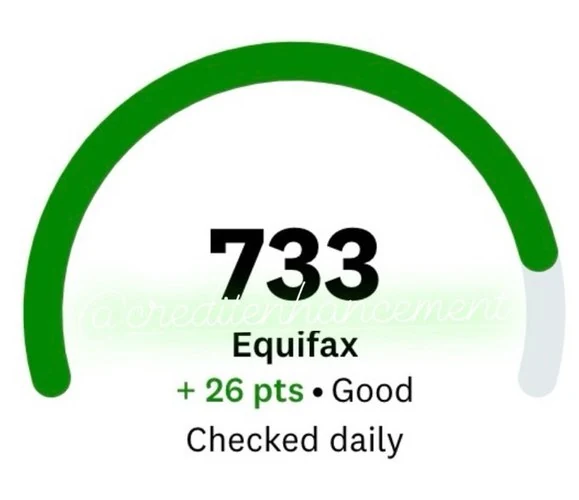
Houston credit repair result: Equifax credit score of 733, up 26 points

Equifax up 26 points

A client reached 733 on Equifax after a 26-point increase, March 2024.

See it on Instagram →

Results vary from person to person and depend on what is in each credit file. Nothing here promises a particular score increase or deletion.

See What Is Holding Your Score Back for a Dollar

You can't raise what you can't see. Read your scores and entries from all three bureaus side by side and find out which accounts and balances are actually dragging your score down.

For a dollar, you can read your scores and entries from Equifax, Experian, and TransUnion before you decide what to do about them.

See What's on My Reports

A dollar with MyScoreIQ opens 7 days of access to your scores, then $34.99 a month if you keep it. Cancel anytime.

Houston Credit Repair Is Proud to Serve Texas

What We Walk Through With You

Raising Your Score can look different from one report to the next. We help you understand the details and spot accuracy problems.

Your Utilization by Card

We review how close each card is to its limit, because that ratio updates every billing cycle.

Errors Worth Disputing

We help you spot balances, dates, and accounts that do not match your records.

Your Payment History

We look at the on-time streak you are building and any late marks still aging on the file.

Accounts That Help or Hurt

We talk through which accounts are helping your score and which ones are holding it back.

The Next 30 to 90 Days

We help you put the fastest moves first and set realistic expectations for the rest.

Why Talk Through Raising Your Score With Us?

Start With the Facts

A Raising Your Score entry feels personal, but on a report it is just data — dates, amounts, and a status. We help you read it as data first.

One Entry, Three Reports

The same account can look different on each bureau. We help you check all three before you act on any one of them.

A Plan You Can Follow

We explain dispute options, what records to keep, and practical habits that help you stay current going forward.

How We Help With Raising Your Score

Read Your Reports Side by Side

We go through your reports with you and flag what is actually dragging the score down.

Check Utilization and Balances

We help you see which balances matter most and in what order to pay them down.

Spot What May Be Wrong

We help you identify information that appears inaccurate, incomplete, or inconsistent with your records.

Talk About Next Steps

We explain dispute options and the habits that raise a score over time.

Questions About Raising Your Score

How fast can my credit score go up?

Utilization changes can show up within a billing cycle or two. Payment history and account age take months. There is no move that raises a score overnight.

Does paying off a credit card raise my score?

Paying a card down usually helps, because lower utilization is a strong scoring factor. Paying it to zero and keeping it open is generally better than closing the account.

Can disputing an error raise my score?

If the entry was inaccurate and the bureau corrects or removes it, the score can change on the next reporting cycle. Disputing an accurate item does not change it.

Does becoming an authorized user help?

It can, if the card has a long, clean history and a low balance. If the cardholder misses payments or carries a high balance, it can hurt your file instead.

Will opening a new card raise my score fast?

Usually not. A new account adds a hard inquiry and lowers the average age of your accounts. One well-chosen account can help over time, but several at once usually backfires.

What hurts a score the fastest?

A new late payment, a balance jumping close to its limit, or a new collection can each pull a score down quickly — which is why autopay and low balances matter so much.

Want to Know What Is Holding Your Score Back?

Let's look at your reports together and find the moves that will actually help your score — and the ones that won't. Call (346) 301-6424.

Call (346) 301-6424

Our Services in Houston, Texas