Credit Repair Value
Is credit repair worth it? It depends on what is on your reports, how much time you have, and what is at stake. Here is how to decide.
Credit repair is worth it when there are errors or unverifiable items on your reports that are costing you money, and when you do not have the time or the patience to chase the bureaus yourself. It is less useful when your reports are accurate and the negative items are recent, because there is little to challenge. The honest answer depends on your file, not on a sales pitch.
Start by looking at your own reports. If you find accounts that are not yours, balances that are wrong, or items that should have aged off, that is real work waiting to be done. If your reports are clean and your score is held back by high balances or late payments that are accurate, the fix is habits and time, not disputes.
The value of credit repair is not in a promise. It is in the work: finding errors, challenging them properly, and following up when the bureaus push back. If your file has real errors, that work has real value. If it does not, no company can create value out of accurate information.
There is also a cost to doing nothing. Errors that sit on your reports keep costing you every time you apply for credit, and they do not fix themselves. The question is not whether credit repair is worth it in general. It is whether it is worth it for your file, right now.
If this guide helped, these pages go deeper on the topics that usually come up next.
These are actual results from past clients, previously shared on Instagram. Every credit file is different, so treat these as examples of what the process can look like, not as a promise of what yours will do.

Three TransUnion clients cleared back to back in August 2025. One client had 8 inquiries deleted in a single sweep; another had Apple Card, Comenity, CareCredit, and USAA accounts removed; a third had a Synchrony account deleted. One client rose 32 points overnight, to 668.
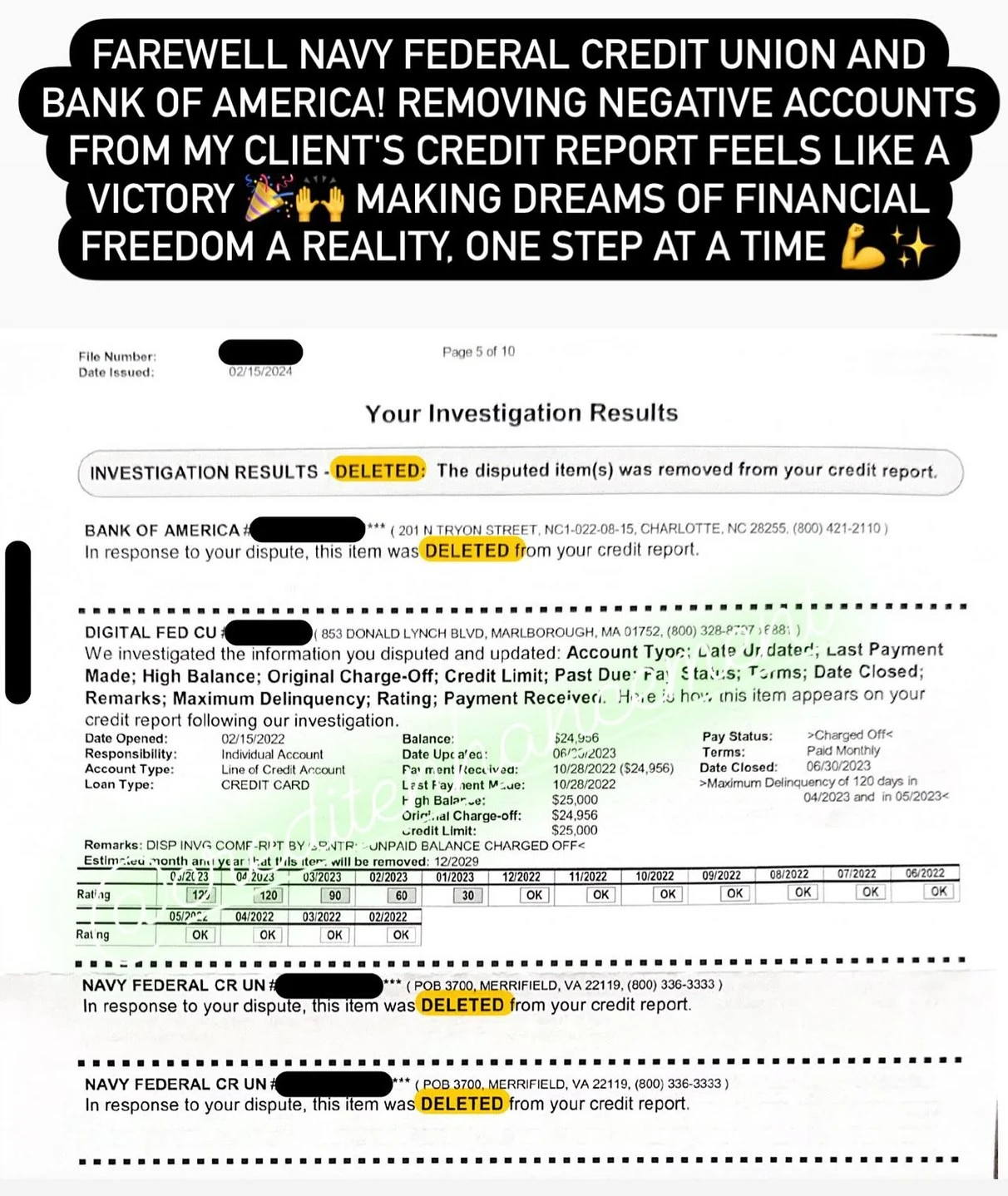
A February 2024 bureau investigation letter showing a Bank of America account and two Navy Federal accounts deleted from a client's credit report after dispute.
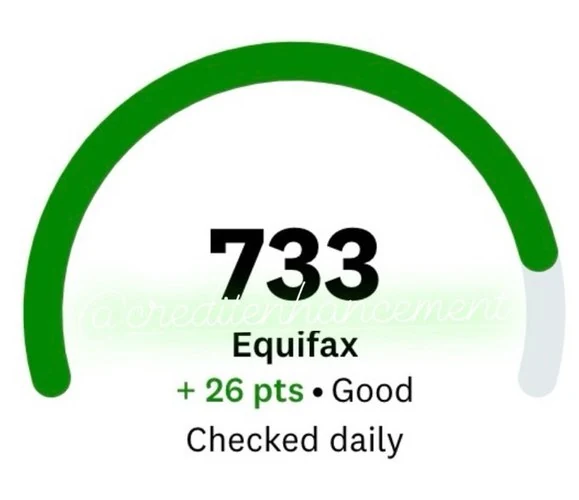
A client reached 733 on Equifax after a 26-point increase, March 2024.
Results vary from person to person and depend on what is in each credit file. Nothing here promises a particular score increase or deletion.
You can't fix what you can't see. Read your scores and entries from all three bureaus side by side and find out what is actually on your reports.
For a dollar, you can read your scores and entries from Equifax, Experian, and TransUnion before you decide what to do about them.
A dollar with MyScoreIQ opens 7 days of access to your scores, then $34.99 a month if you keep it. Cancel anytime.
Credit Repair Value can look different from one report to the next. We help you understand the details and spot accuracy problems.
Get all three reports and read them line by line. You cannot decide whether help is worth it until you know what is actually on your file.
One wrong collection can matter more than ten small issues. The question is how many items are inaccurate, unverifiable, or past their reporting time.
Disputing is something you can do yourself. A company does the work for you: the letters, the follow-ups, the tracking. That is the trade.
A mortgage, a car loan, or an apartment application changes the math. A few points can mean a different rate or an approval instead of a denial.
A legitimate company explains its process, charges nothing before work is performed, and gives you a written contract with a three-day right to cancel.
A Credit Repair Value entry feels personal, but on a report it is just data — dates, amounts, and a status. We help you read it as data first.
The same account can look different on each bureau. We help you check all three before you act on any one of them.
We explain dispute options, what records to keep, and practical habits that help you stay current going forward.
Accounts, collections, or inquiries you do not recognize are the clearest sign that help has something to work with.
A denial letter tells you which bureau's report was used. That report is where the work starts.
Disputing takes letters, tracking, and follow-up. If your time is worth more than the work, hiring it out makes sense.
A mortgage or auto loan on a deadline is when accuracy matters most, and when there is the least time to learn the process from scratch.
It depends on what is on your reports and how the bureaus respond. Each dispute round generally takes about 30 days, and some files need more than one round.
No one can promise a score increase. Removing an inaccurate item can help, but your score also depends on balances, payment history, and the age of your accounts.
Yes. You have the right to dispute errors with the bureaus yourself, at no cost to you beyond your time and postage. A company does the work for you.
Yes. The Fair Credit Reporting Act gives you the right to dispute inaccurate information, and the Credit Repair Organizations Act sets the rules companies must follow, including no payment before work is performed.
It varies by company and by the work involved. Ask for the price in writing before you sign anything, and be wary of anyone who charges before doing any work.
Let's look at your reports together and find the moves that will actually help — and the ones that won't. Call (346) 301-6424.