609 Letters

What Is a 609 Letter and Does It Work in Houston, Texas

A 609 Letter Is a Request for Information — Not a Magic Eraser

Search for credit repair online and you'll find 609 letters everywhere — sold as templates, praised in videos, promised as a way to delete anything from a report. The truth is narrower and more useful than the hype. A 609 letter is a real tool with a real legal basis, and this guide explains what it actually does.

What Section 609 Actually Says

Section 609 of the Fair Credit Reporting Act gives you the right to see the information in your credit file and to get a disclosure of what the bureau has on you — including the sources of the information and, in many cases, the details of how it was verified. A “609 letter” is a letter that invokes that right: it asks the bureau to disclose the information it holds about a specific account and to show that the information is complete and verifiable.

That is a real right, and it is a useful one. But it is not a deletion tool. Section 609 does not say that a bureau must delete an account if it cannot produce a signed contract or an original document, and it does not override the dispute process in Section 611 — which is the part of the law that governs investigations, the 30-day window, and when information must be corrected or removed. The idea that a 609 letter forces a bureau to delete anything it cannot “prove” with original paperwork is a myth, and it is the myth that sells the templates.

What a 609 letter can do is get you information: the details of an entry, the source of the data, and the method of verification. That information can help you write a better dispute — because a dispute that names the exact error, with proof, is far stronger than a letter that asks the bureau to prove its file.

When a 609 Letter Helps — and When a Dispute Is Better

A 609 letter is worth sending when you cannot tell what an entry is or where it came from: an account with a vague creditor name, a collection with no original creditor listed, an entry that looks like it belongs to someone else. In those cases, asking the bureau to disclose what it has can clear up the confusion and point you toward the right dispute.

A regular dispute is better when you already know what is wrong. If a late payment shows the wrong date, a collection shows the wrong balance, or an account that is not yours appears on your report, a dispute under Section 611 is the direct path: it triggers the investigation, the 30-day clock, and the requirement that the bureau correct or remove information it cannot verify. You do not need a 609 letter first, and sending one instead of a dispute can cost you a month.

Be careful with template letters in general. Bureaus see thousands of identical 609 templates, and a letter that reads like a form — with no specifics about your account, no documents, and a demand for deletion — is easy to process as a generic request. A letter in your own words, naming the specific account and the specific information you are asking about, gets a better response than a template with your name filled in.

How to Write a 609 Letter That Actually Helps

Keep it short and specific. Identify yourself (name, address, date of birth, and the last four of your Social Security number), name the account and the bureau, and state clearly what you are asking for: disclosure of the information the bureau holds about that account, including the source and the method of verification. Ask for a written response. Send it by certified mail and keep a copy.

Then use what comes back. If the disclosure shows the entry is based on information from a creditor you recognize, your next step is a dispute with that creditor or a goodwill request — not another 609 letter. If the disclosure shows the bureau has thin or conflicting information, your next step is a specific dispute naming the exact problem. The 609 letter is a flashlight, not a hammer: it shows you what is there so you can decide what to do about it.

And if someone is selling you a 609 letter template with a promise that it deletes accurate negative items — late payments you did miss, collections you do owe, a bankruptcy that is real — that promise is the warning sign. Accurate information generally stays for its reporting window, and no letter changes that.

When you dispute by mail, send it to the bureau that shows the item. The mailing addresses are: Experian, P.O. Box 4500, Allen, TX 75013; Equifax, P.O. Box 740256, Atlanta, GA 30374; and TransUnion, P.O. Box 2000, Chester, PA 19016. Bureaus generally have 30 days to investigate a dispute once they receive it. Send disputes by certified mail and keep a copy of everything you send, along with the delivery confirmation.

Related Guides and Services

If this guide helped, these pages go deeper on the topics that usually come up next.

A First Look at Real Results

These are actual results from past clients, previously shared on Instagram. Every credit file is different, so treat these as examples of what the process can look like, not as a promise of what yours will do.
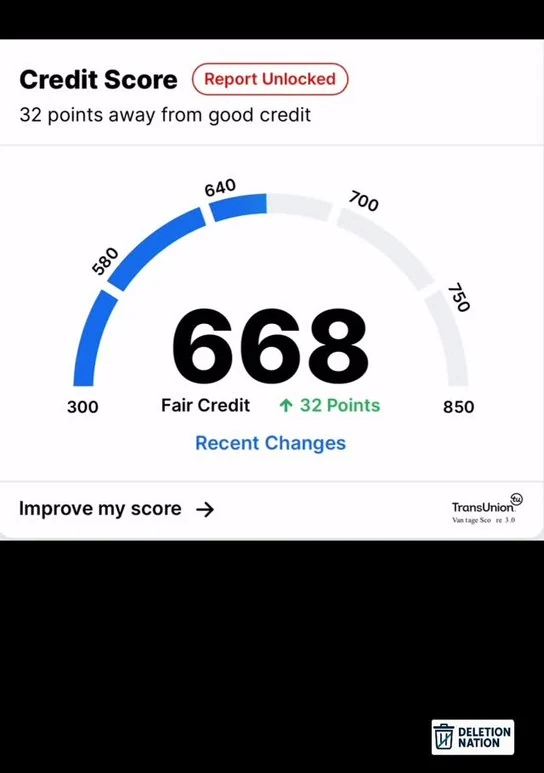
Houston credit repair result: TransUnion credit score of 668, up 32 points

Three clients, 13 deletions, one round

Three TransUnion clients cleared back to back in August 2025. One client had 8 inquiries deleted in a single sweep; another had Apple Card, Comenity, CareCredit, and USAA accounts removed; a third had a Synchrony account deleted. One client rose 32 points overnight, to 668.
See it on Instagram →

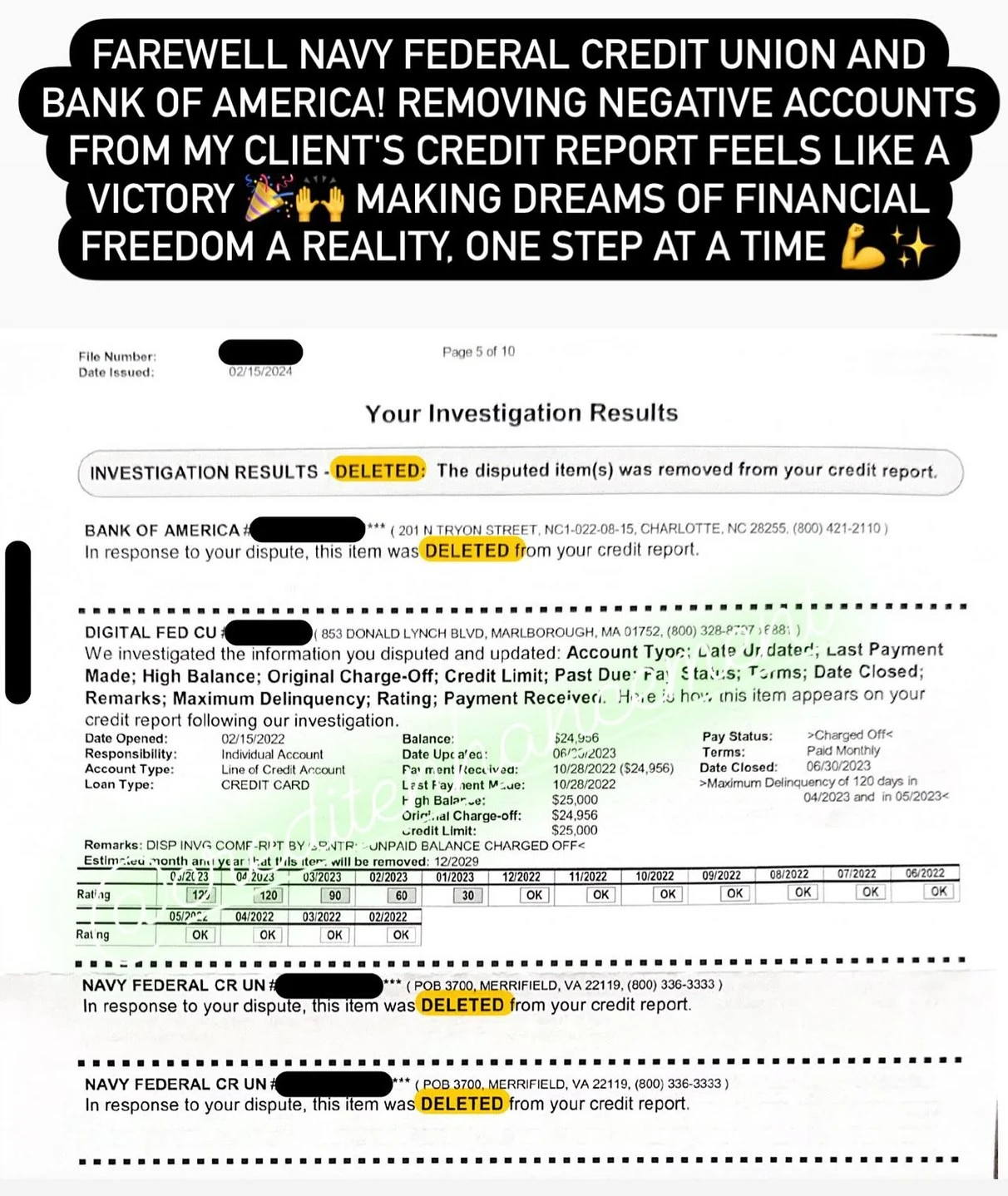
Houston credit repair result: Credit bureau investigation letter showing Bank of America and Navy Federal accounts deleted

Bank of America and Navy Federal, deleted

A February 2024 bureau investigation letter showing a Bank of America account and two Navy Federal accounts deleted from a client's credit report after dispute.
See it on Instagram →

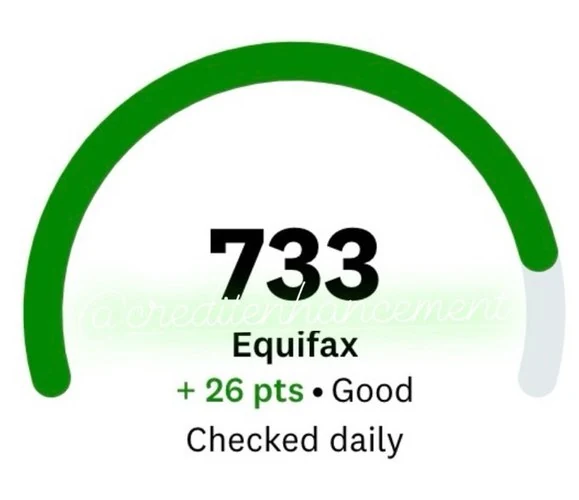
Houston credit repair result: Equifax credit score of 733, up 26 points

Equifax up 26 points

A client reached 733 on Equifax after a 26-point increase, March 2024.

See it on Instagram →

Results vary from person to person and depend on what is in each credit file. Nothing here promises a particular score increase or deletion.

See What Your Reports Actually Show for a Dollar

You can't challenge what you can't see. Read every entry across all three bureaus first — a 609 letter starts with knowing what is in your file.

For a dollar, you can read your scores and entries from Equifax, Experian, and TransUnion before you decide what to do about them.

See What's on My Reports

A dollar with MyScoreIQ opens 7 days of access to your scores, then $34.99 a month if you keep it. Cancel anytime.

Houston Credit Repair Is Proud to Serve Texas

What We Walk Through With You

609 Letters can look different from one report to the next. We help you understand the details and spot accuracy problems.

What Section 609 Covers

We explain what the law gives you the right to see — and what it does not.

The Entry in Question

We review the specific account and what the bureau actually shows for it.

609 Letter vs Dispute

We help you decide whether a disclosure request or a dispute is the right next step.

What to Ask For

We talk through what a 609 letter should request, in plain language.

Using the Answer

We explain what to do with the disclosure once it comes back.

Why Talk Through 609 Letters With Us?

Start With the Facts

A 609 Letters entry feels personal, but on a report it is just data — dates, amounts, and a status. We help you read it as data first.

One Entry, Three Reports

The same account can look different on each bureau. We help you check all three before you act on any one of them.

A Plan You Can Follow

We explain dispute options, what records to keep, and practical habits that help you stay current going forward.

How We Help With 609 Letters

Review the Entry

We talk through the account or entry you want more information about.

Explain Your Rights

We explain the disclosure right and the dispute process in plain language.

Draft Your Letter

We help you write a specific request in your own words.

Plan the Next Step

We talk through what to do with the answer when it arrives.

Questions About 609 Letters

What is a 609 letter?

A 609 letter is a request for disclosure under Section 609 of the Fair Credit Reporting Act. It asks a credit bureau to disclose the information it holds about a specific account, including the source and the method of verification.

Does a 609 letter delete negative items?

No. Section 609 is a disclosure right, not a deletion tool. It does not require a bureau to delete an account, and it does not override the dispute process in Section 611.

When should I send a 609 letter instead of a dispute?

Send a 609 letter when you cannot tell what an entry is or where it came from. Send a dispute when you already know what is wrong — a dispute triggers the investigation and the 30-day clock.

Do I need a template to write a 609 letter?

No. A short letter in your own words, naming the specific account and what you are asking for, works better than a generic template.

How long does a bureau have to respond to a 609 letter?

A 609 request is a disclosure request, not a dispute, so the 30-day dispute investigation window does not apply to it in the same way. If you need a correction, file a dispute.

Can a 609 letter remove an accurate late payment?

No. Accurate information generally stays for its reporting window — up to seven years for a late payment — and no letter changes that.

Not Sure Whether a 609 Letter Is the Right Move?

A 609 letter is a flashlight, not a hammer — and a dispute is often the faster path. Let's look at your file and talk about which one fits. Call (346) 301-6424.

Call (346) 301-6424

Our Services in Houston, Texas