Building Credit
No Credit History Is a Starting Point, Not a Dead End
If you've never had a credit card, a loan, or a utility in your name, your credit file may be thin or empty — and in Houston, that can make renting an apartment in the Heights, getting a car loan, or even setting up utilities harder than it should be. Building credit from zero is a slow, steady process, and this guide lays out the steps that actually work.
A credit score is built from the history in your credit file, and if the file is empty, there is nothing to score. Lenders facing a thin file are not seeing bad credit — they are seeing no information — and most of them would rather see a short, clean history than none at all. The goal of building credit from scratch is to create that history: a few accounts, reported to the bureaus, paid on time, month after month.
There are a few ways to start. A secured credit card is the most common: you put down a deposit — often $200 to $500 — and that deposit becomes your credit limit. Use the card for a small purchase each month, like gas on the way down I-10, and pay the balance in full. A credit-builder loan, offered by many Houston-area credit unions, works the other way around: the loan amount is held in a savings account while you make payments, and you get the money when the loan is paid off. Both report to the bureaus, and both build payment history — the single largest factor in most scoring models.
Becoming an authorized user on a family member's card is another path, and it can help — but only if that card has a long, clean history and a low balance. If the primary cardholder misses payments or carries a high balance, that history shows on your file too. It is a shortcut, not a substitute for your own accounts.
Step 1 — Check whether you have a file. Pull your reports from all three bureaus at annualcreditreport.com, the official site. Some people with no credit history have no file at all; others discover an old account they forgot about, or a collection they did not know existed. Knowing where you stand is the starting point.
Step 2 — Open one secured card. Choose a secured card from a bank or credit union that reports to all three bureaus and has no annual fee or a low one. Avoid cards that charge high fees just to open the account. Put down a deposit you can afford, and use the card for one small purchase a month.
Step 3 — Keep the balance low and pay in full. Use less than about 30 percent of the limit — less is better — and pay the full statement balance every month. Paying in full means no interest, and a low balance relative to the limit helps the utilization piece of your score.
Step 4 — Add a second account after six months. Once the secured card has six months of on-time payments, consider a second account: a credit-builder loan, a small personal loan, or a retail card you will actually use. Two accounts with clean history look stronger than one, and a mix of account types helps over time.
Step 5 — Be patient and protect the file. A score built from scratch takes time — usually at least six months of history before a score is even generated, and a year or more before it looks solid to a lender. During that time, pay every bill on time, do not apply for several accounts at once, and check your reports regularly so an error or an unauthorized account gets caught early.
The most common mistake is applying for several cards at once after a few denials. Each application is a hard inquiry, and a cluster of inquiries on a thin file looks risky. Apply for one card, wait for the answer, and if you are denied, find out why before you apply again — a secured card from a credit union is often easier to get than a big-bank card.
Another mistake is carrying a balance on the secured card because you heard it “builds credit faster.” It does not. Paying in full each month builds the same payment history without the interest. And closing the secured card after a year is a mistake too — its history is part of your file, and keeping it open with a small occasional purchase preserves that history. Many issuers will graduate a secured card to an unsecured card and return the deposit after a year of on-time payments; ask about that before you close anything.
When you dispute by mail, send it to the bureau that shows the item. The mailing addresses are: Experian, P.O. Box 4500, Allen, TX 75013; Equifax, P.O. Box 740256, Atlanta, GA 30374; and TransUnion, P.O. Box 2000, Chester, PA 19016. Bureaus generally have 30 days to investigate a dispute once they receive it. Send disputes by certified mail and keep a copy of everything you send, along with the delivery confirmation.
If this guide helped, these pages go deeper on the topics that usually come up next.
These are actual results from past clients, previously shared on Instagram. Every credit file is different, so treat these as examples of what the process can look like, not as a promise of what yours will do.
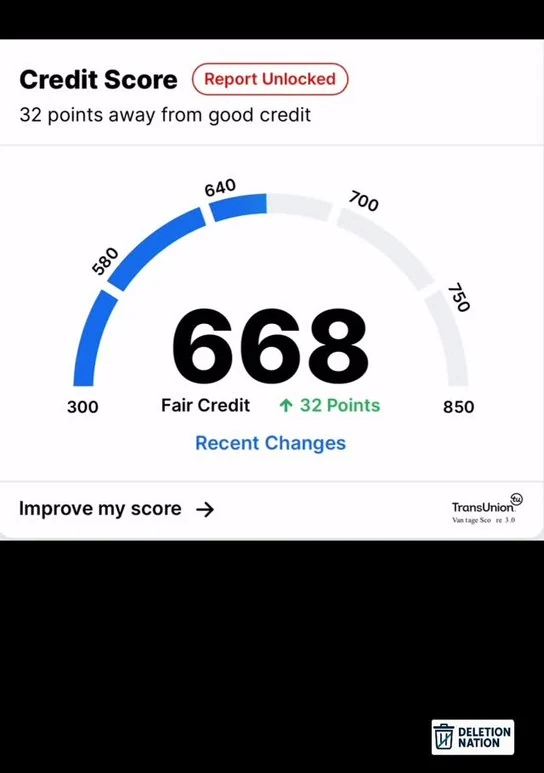
Three TransUnion clients cleared back to back in August 2025. One client had 8 inquiries deleted in a single sweep; another had Apple Card, Comenity, CareCredit, and USAA accounts removed; a third had a Synchrony account deleted. One client rose 32 points overnight, to 668.
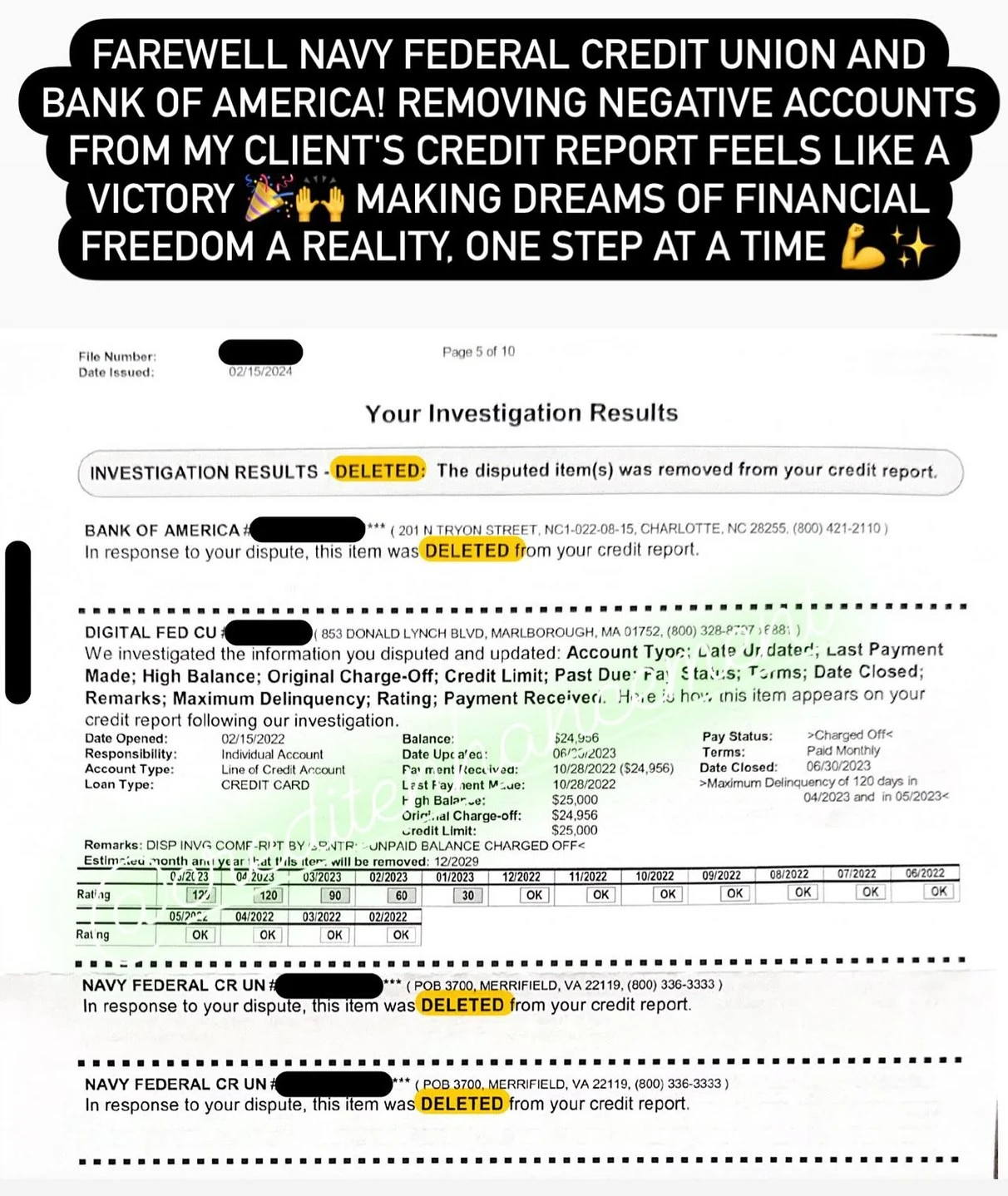
A February 2024 bureau investigation letter showing a Bank of America account and two Navy Federal accounts deleted from a client's credit report after dispute.
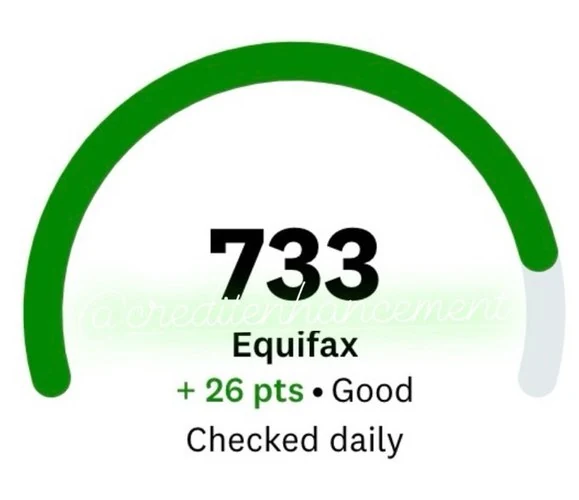
A client reached 733 on Equifax after a 26-point increase, March 2024.
Results vary from person to person and depend on what is in each credit file. Nothing here promises a particular score increase or deletion.
You can't build what you can't see. Check whether you have a file at all, and what is already in it, across all three bureaus before you apply for anything.
For a dollar, you can read your scores and entries from Equifax, Experian, and TransUnion before you decide what to do about them.
A dollar with MyScoreIQ opens 7 days of access to your scores, then $34.99 a month if you keep it. Cancel anytime.
Building Credit can look different from one report to the next. We help you understand the details and spot accuracy problems.
We help you check what the bureaus already have on you — if anything.
We talk through how a secured card works and what to look for in one.
We explain how a credit-builder loan builds payment history.
We talk through when becoming an authorized user helps — and when it can hurt.
We explain the payment and utilization habits that grow a new file.
A Building Credit entry feels personal, but on a report it is just data — dates, amounts, and a status. We help you read it as data first.
The same account can look different on each bureau. We help you check all three before you act on any one of them.
We explain dispute options, what records to keep, and practical habits that help you stay current going forward.
We help you see what is already in your file, if anything.
We talk through secured cards and credit-builder loans in plain language.
We explain autopay, low balances, and the monthly routine that builds history.
We explain how to check your reports as your file grows.
Usually at least six months of history before a score is generated, and a year or more before the file looks solid to a lender. On-time payments every month are what build it.
A secured credit card from a bank or credit union that reports to all three bureaus is the most common first step. A credit-builder loan is another good option.
It can help, if the primary cardholder has a long, clean history and a low balance. If they miss payments or carry a high balance, that shows on your file too.
No. Paying the full statement balance each month builds the same payment history without the interest charges.
Start with one, add a second after about six months of on-time payments. Two accounts with clean history look stronger than one.
No. Checking your own credit is a soft inquiry and does not affect your score.
A thin file is a starting point, not a dead end. Let's check what the bureaus have on you and talk about the first account that fits. Call (346) 301-6424.