Rebuilding After Bankruptcy

How to Rebuild Credit After Bankruptcy in Houston, Texas

The Discharge Is the Starting Line, Not the Finish

A bankruptcy discharge wipes the slate on the debts it covers — but it doesn't build the credit file that comes next. That part is up to you, and it starts the day after discharge. Here's how Houstonians rebuild a credit file after bankruptcy, step by step, without falling into the same traps.

First, Make Sure the Bankruptcy File Is Clean

Before you open a single new account, audit the file you already have. Every account included in your bankruptcy should show a zero balance and a status indicating it was discharged or included in bankruptcy. That is the single most common error in a post-bankruptcy file — an included account that still shows a balance, still shows as past due, or still shows a monthly payment — and it drags a score down for no reason.

Pull your reports from all three bureaus at annualcreditreport.com, the official site, and go through every account from the filing. Dispute any that still show a balance or a past-due status, with your discharge papers as proof. Bureaus generally have 30 days to investigate. A clean post-bankruptcy file is the foundation everything else is built on; rebuilding on top of errors that should have been corrected is like painting over a crack.

Also confirm the bankruptcy entry itself is correct: the filing date, the chapter, the court, and the discharge date. A Chapter 7 can stay for up to 10 years from filing; a Chapter 13 generally stays for up to seven. The entry itself is rarely removable if it is accurate — it is a court record — but the accounts around it are frequently wrong, and fixing them is where the real gains are.

Step by Step: Rebuilding After Discharge

Step 1 — Open a secured credit card. A secured card is the standard first account after bankruptcy. You put down a deposit — often $200 to $500 — and that deposit becomes your limit. Use it for one small purchase a month, like gas on the way to work, and pay the balance in full. Choose a card that reports to all three bureaus and that graduates to an unsecured card after a year of on-time payments.

Step 2 — Add a credit-builder loan. Many Houston-area credit unions offer credit-builder loans: the loan amount is held in savings while you make payments, and you get the money when the loan is paid off. It adds a second account type to your file and another stream of on-time payments — and the mix of account types helps over time.

Step 3 — Pay everything on time, every month. Payment history is the largest factor in most scoring models, and after a bankruptcy it is the whole story. Set up autopay for at least the minimum on every account — the secured card, the credit-builder loan, rent, utilities. A single late payment in the first year after discharge sets the rebuild back further than the same late payment would on a clean file.

Step 4 — Keep balances low. Use less than about 30 percent of each card's limit, and less is better. A secured card with a $300 limit and a $250 balance looks strained; the same card with a $40 balance looks controlled. Paying in full each month handles this automatically.

Step 5 — Wait, and let time work. A score after bankruptcy recovers gradually, not all at once. The first year is about establishing a clean record; the second and third years are about deepening it. After about two years of clean history, many borrowers qualify for an unsecured card with a modest limit; after three to four, an auto loan at a reasonable rate; and a mortgage becomes realistic once the waiting period for the loan program has passed and the file shows steady history.

Traps to Avoid While Rebuilding

The most dangerous trap after bankruptcy is the high-fee credit offer. Companies target recent bankruptcy filers with cards that charge large setup fees, high annual fees, and high rates — and the fees eat the credit limit before you ever use the card. A secured card from a credit union or a mainstream bank is a far better first account than a card that charges you for the privilege of rebuilding.

Another trap is borrowing to “prove” you can handle credit. You do not need a large loan to rebuild — a small secured card and a small credit-builder loan are enough. Big new debts in the first year after discharge are exactly the pattern that led to the bankruptcy, and lenders notice.

Finally, do not pay anyone who promises to remove the bankruptcy from your report early. An accurate bankruptcy entry stays for its full window, and the dispute process is available to you directly. The money is better spent on the deposit for a secured card.

When you dispute by mail, send it to the bureau that shows the item. The mailing addresses are: Experian, P.O. Box 4500, Allen, TX 75013; Equifax, P.O. Box 740256, Atlanta, GA 30374; and TransUnion, P.O. Box 2000, Chester, PA 19016. Bureaus generally have 30 days to investigate a dispute once they receive it. Send disputes by certified mail and keep a copy of everything you send, along with the delivery confirmation.

Related Guides and Services

If this guide helped, these pages go deeper on the topics that usually come up next.

A First Look at Real Results

These are actual results from past clients, previously shared on Instagram. Every credit file is different, so treat these as examples of what the process can look like, not as a promise of what yours will do.
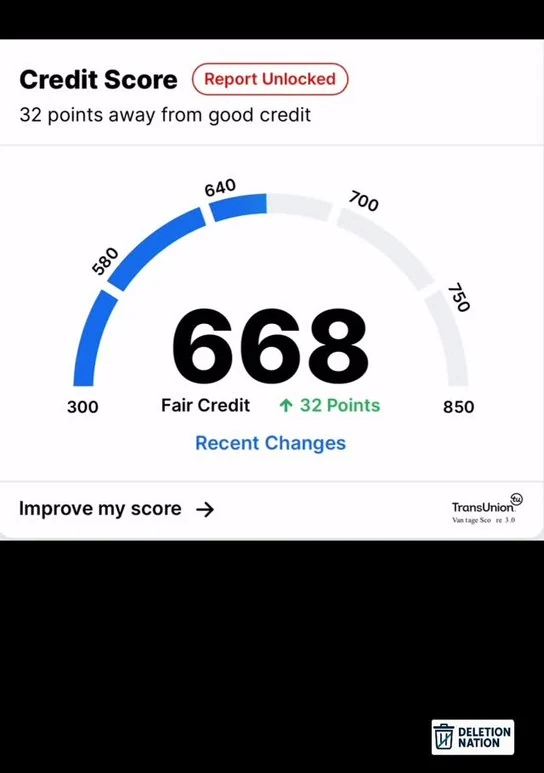
Houston credit repair result: TransUnion credit score of 668, up 32 points

Three clients, 13 deletions, one round

Three TransUnion clients cleared back to back in August 2025. One client had 8 inquiries deleted in a single sweep; another had Apple Card, Comenity, CareCredit, and USAA accounts removed; a third had a Synchrony account deleted. One client rose 32 points overnight, to 668.
See it on Instagram →

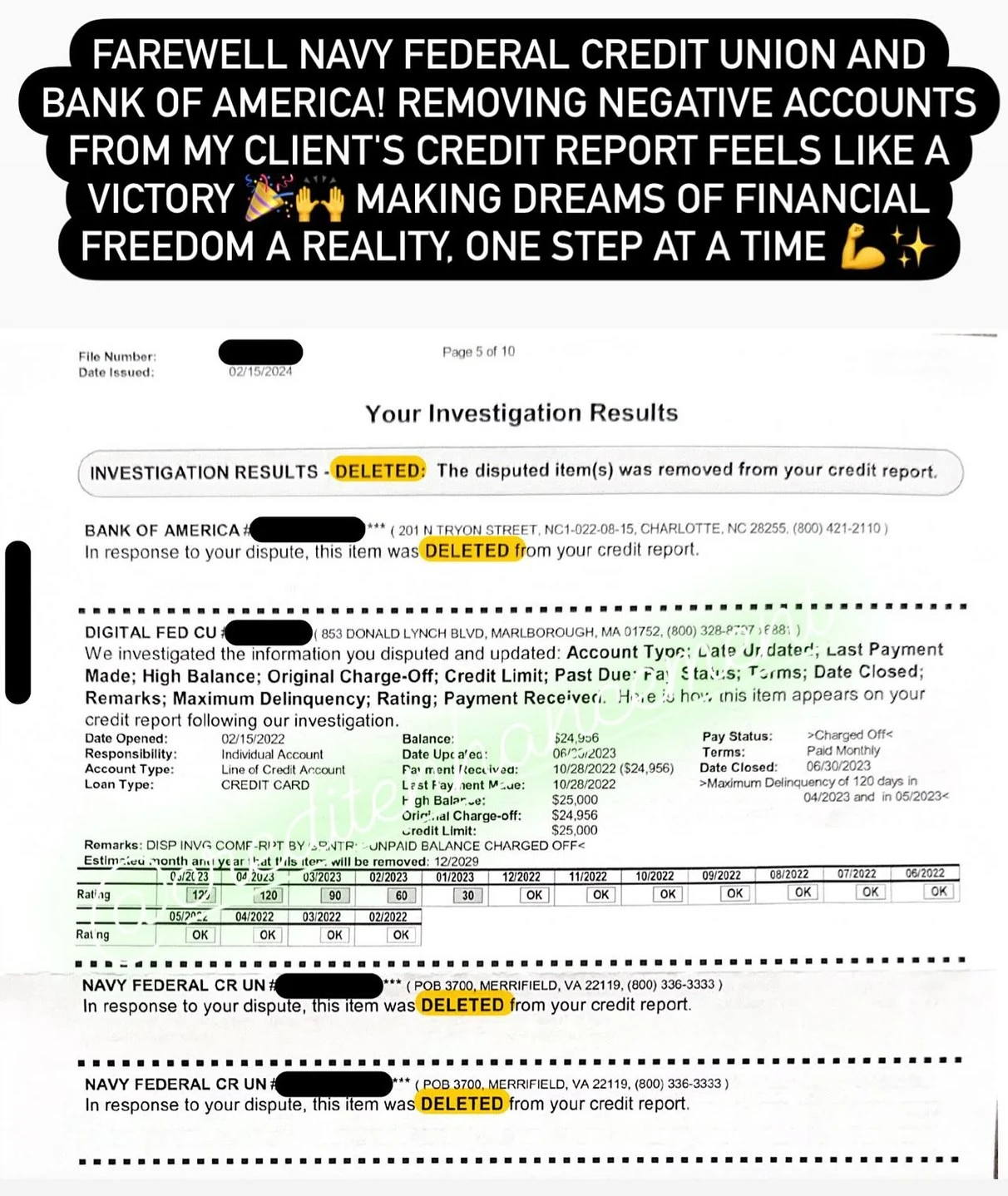
Houston credit repair result: Credit bureau investigation letter showing Bank of America and Navy Federal accounts deleted

Bank of America and Navy Federal, deleted

A February 2024 bureau investigation letter showing a Bank of America account and two Navy Federal accounts deleted from a client's credit report after dispute.
See it on Instagram →

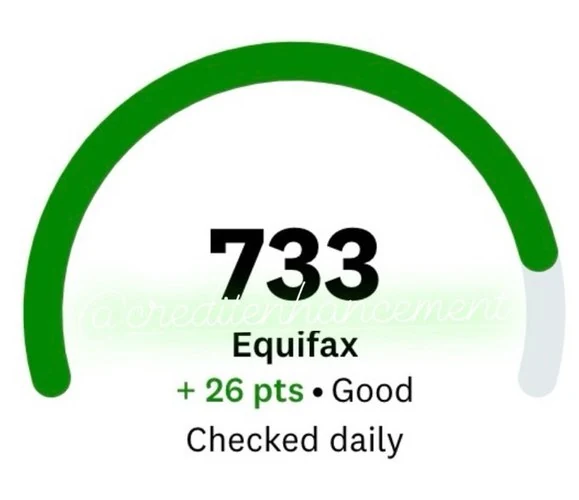
Houston credit repair result: Equifax credit score of 733, up 26 points

Equifax up 26 points

A client reached 733 on Equifax after a 26-point increase, March 2024.

See it on Instagram →

Results vary from person to person and depend on what is in each credit file. Nothing here promises a particular score increase or deletion.

See Your Post-Bankruptcy File for a Dollar

You can't rebuild what you can't see. Check every account from your bankruptcy and your current file across all three bureaus before you apply for anything.

For a dollar, you can read your scores and entries from Equifax, Experian, and TransUnion before you decide what to do about them.

See What's on My Reports

A dollar with MyScoreIQ opens 7 days of access to your scores, then $34.99 a month if you keep it. Cancel anytime.

Houston Credit Repair Is Proud to Serve Texas

What We Walk Through With You

Rebuilding After Bankruptcy can look different from one report to the next. We help you understand the details and spot accuracy problems.

The Post-Bankruptcy Audit

We review every account from the filing for a zero balance and a discharged status.

Secured Cards

We talk through how a secured card works and what to look for in one.

Credit-Builder Loans

We explain how a credit-builder loan adds a second account type to your file.

The Habits That Rebuild

We explain autopay, low balances, and the monthly routine that grows clean history.

What to Avoid

We talk through the high-fee offers and traps that target recent filers.

Why Talk Through Rebuilding After Bankruptcy With Us?

Start With the Facts

A Rebuilding After Bankruptcy entry feels personal, but on a report it is just data — dates, amounts, and a status. We help you read it as data first.

One Entry, Three Reports

The same account can look different on each bureau. We help you check all three before you act on any one of them.

A Plan You Can Follow

We explain dispute options, what records to keep, and practical habits that help you stay current going forward.

How We Help With Rebuilding After Bankruptcy

Audit Your Post-Bankruptcy File

We talk through the bankruptcy entry and every account tied to it.

Choose First Accounts

We talk through secured cards and credit-builder loans in plain language.

Set Up Good Habits

We explain the payment routine that rebuilds a file after discharge.

Track Your Progress

We explain how to check your reports as your new history grows.

Questions About Rebuilding After Bankruptcy

How long after bankruptcy can I get a credit card?

Many borrowers can open a secured credit card within a few months of discharge. Choose one that reports to all three bureaus and graduates to an unsecured card.

How long does it take to rebuild credit after bankruptcy?

Recovery is gradual. The first year is about establishing clean history; after about two years of on-time payments, many borrowers qualify for an unsecured card, and a mortgage becomes realistic once the loan program's waiting period has passed.

Does bankruptcy stay on my report for 10 years?

A Chapter 7 can stay for up to 10 years from filing. A Chapter 13 generally stays for up to seven years. The accounts included in the bankruptcy generally fall off sooner, about seven years from first delinquency.

Should I dispute accounts from my bankruptcy?

Yes, if they are wrong. Accounts included in a bankruptcy should show a zero balance and a discharged status. If one still shows a balance or a past-due status, dispute it with your discharge papers as proof.

What is the best way to rebuild after bankruptcy?

A secured card used lightly and paid in full each month, plus a credit-builder loan, with every payment on time. That combination builds the clean history lenders want to see.

Can I get a mortgage after bankruptcy?

Yes. Many mortgage programs have waiting periods — often two to seven years depending on the loan type — and the strongest applications show steady on-time payments and rebuilt savings afterward.

Ready to Rebuild After Bankruptcy?

The discharge is the starting line. Let's audit your file, fix what's wrong, and talk about the first accounts that rebuild it right. Call (346) 301-6424.

Call (346) 301-6424

Our Services in Houston, Texas