Student Loan Default
Default Isn't the End of the Story — There Are Ways Out
A federal student loan in default can garnish wages, seize a tax refund, and sit on a credit report for years — and in Houston, where many borrowers went to school at UH, Texas Southern, or Houston Community College and then hit a rough stretch, default is more common than people admit. The good news: federal loans have built-in ways out of default, and this guide walks through them.
A federal student loan generally goes into default after about 270 days — nine months — without a payment. Once in default, the loan is usually transferred to a collection agency, the entire balance becomes due, and the government can garnish wages and seize federal tax refunds without a court order. The default is also reported to the credit bureaus, where it can stay for about seven years from the date of default — though the late payments that led up to it carry their own seven-year windows from each missed payment date.
Private student loans work differently. They are governed by the loan contract, not federal rules, and there is no rehabilitation program for them. A private loan in default is closer to any other defaulted consumer debt: it can be charged off, sent to collections, and sued on within the statute of limitations. This guide focuses on federal loans, because that is where the built-in ways out exist — but if your loan is private, the dispute and settlement principles in our collections and charge-off guides still apply.
The first step is to find out exactly what you owe and to whom. Log in at studentaid.gov — the federal student aid site — and you will see every federal loan, its servicer, its balance, and its status. Many Houston borrowers are surprised to learn they have several loans with different servicers, or that a loan they thought was private is actually federal. Knowing which loans are federal, and which are in default, is the foundation for everything that follows.
Option 1 — Loan rehabilitation. Rehabilitation is a one-time program where you agree with the loan holder to make nine on-time monthly payments in ten consecutive months. The payment amount is based on your income and can be as low as a small monthly figure for a borrower with limited income. Once you complete the nine payments, the loan comes out of default, the default notation is removed from your credit report, and the loan returns to a regular servicer with a current status. Rehabilitation can only be used once per loan, and it is the only option that removes the default notation itself — which is why it is usually the better choice when it is available.
Option 2 — Consolidation. Consolidation rolls your defaulted federal loans into a new Direct Consolidation Loan. It gets you out of default faster — usually within weeks — and it stops garnishment and tax refund offset. But it does not remove the default notation from your credit report the way rehabilitation does, and it does not erase the late payment history that led to the default. Consolidation is the better choice when you need out of default quickly, for example to regain eligibility for federal student aid or to stop a garnishment right away.
Both options require you to stay current afterward. A rehabilitated or consolidated loan that goes delinquent again is back in the same trouble, and the late payments start a new clock. Before you choose, talk to the loan holder or a student loan counselor about the payment amount, the timeline, and whether an income-driven repayment plan makes sense once the loan is current again. Income-driven plans can set a monthly payment based on what you earn, and for some Houston borrowers that payment is low enough to stay current without strain.
Pull your reports from all three bureaus at annualcreditreport.com, the official site, and find every student loan entry. Check the servicer, the balance, the status, and the dates. A loan that was rehabilitated should no longer show a default notation. A loan that was consolidated should show the old loan as paid or transferred and the new consolidation loan as current. Late payments from before the default generally stay for about seven years from each missed payment date — rehabilitation removes the default notation, not the late payment history.
Errors in student loan reporting are common: a loan showing in default after rehabilitation, a balance that does not match the servicer, a loan reported twice by two different servicers, or a private loan reported as federal. Dispute inaccuracies with the bureau and the servicer, with your studentaid.gov records and payment history as proof. Bureaus generally have 30 days to investigate.
Finally, watch out for companies that charge large fees to “fix” a student loan default. Rehabilitation and consolidation are available to you directly through the loan holder and studentaid.gov, and the application process does not require a paid middleman.
When you dispute by mail, send it to the bureau that shows the item. The mailing addresses are: Experian, P.O. Box 4500, Allen, TX 75013; Equifax, P.O. Box 740256, Atlanta, GA 30374; and TransUnion, P.O. Box 2000, Chester, PA 19016. Bureaus generally have 30 days to investigate a dispute once they receive it. Send disputes by certified mail and keep a copy of everything you send, along with the delivery confirmation.
If this guide helped, these pages go deeper on the topics that usually come up next.
These are actual results from past clients, previously shared on Instagram. Every credit file is different, so treat these as examples of what the process can look like, not as a promise of what yours will do.
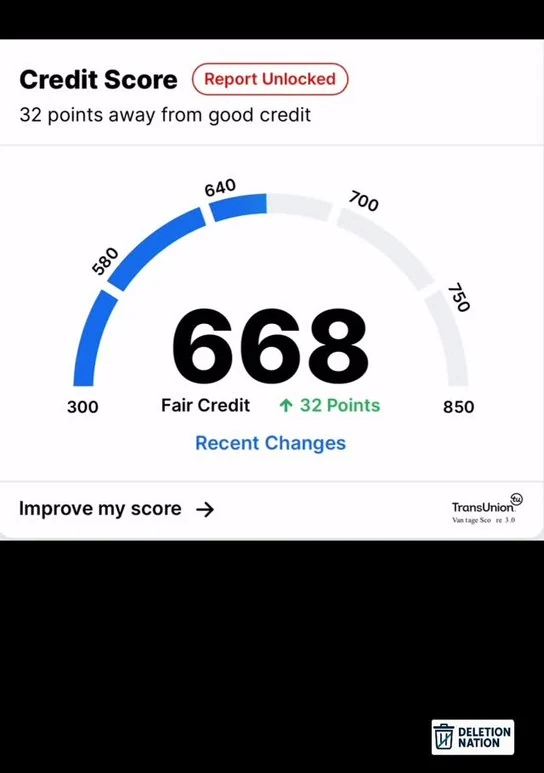
Three TransUnion clients cleared back to back in August 2025. One client had 8 inquiries deleted in a single sweep; another had Apple Card, Comenity, CareCredit, and USAA accounts removed; a third had a Synchrony account deleted. One client rose 32 points overnight, to 668.
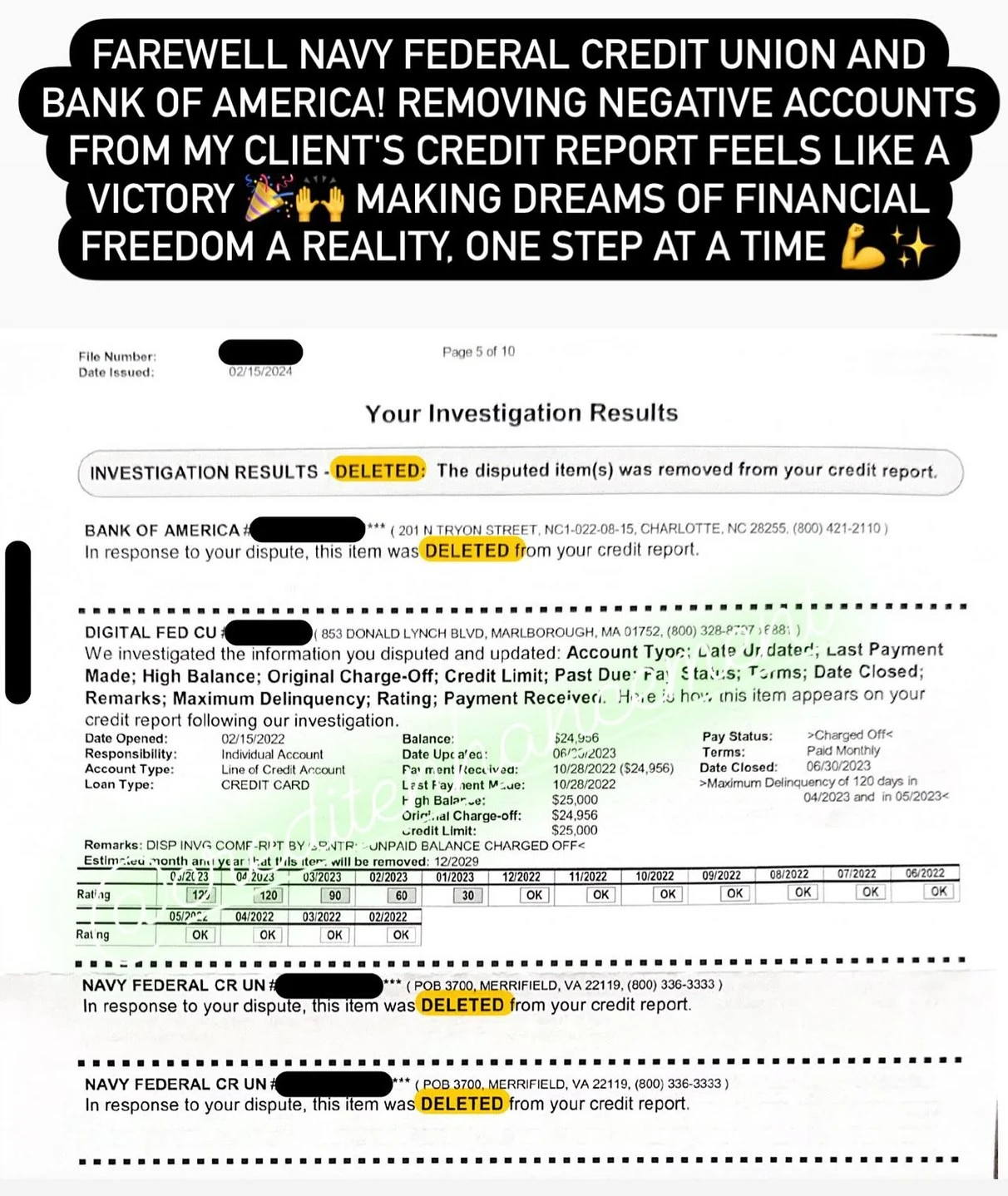
A February 2024 bureau investigation letter showing a Bank of America account and two Navy Federal accounts deleted from a client's credit report after dispute.
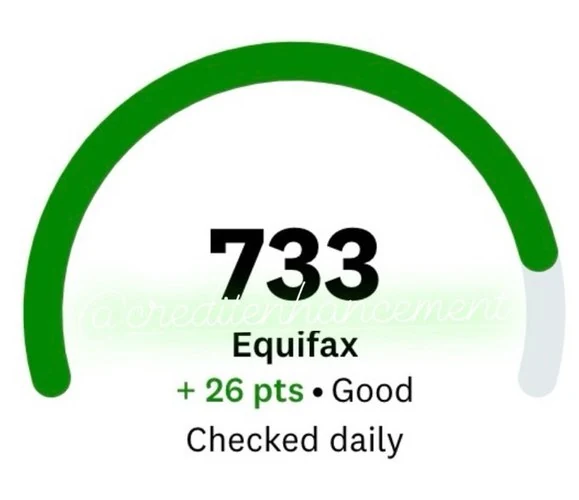
A client reached 733 on Equifax after a 26-point increase, March 2024.
Results vary from person to person and depend on what is in each credit file. Nothing here promises a particular score increase or deletion.
You can't challenge what you can't see. Read every student loan entry — the servicer, the balance, the status — across all three bureaus before you contact anyone.
For a dollar, you can read your scores and entries from Equifax, Experian, and TransUnion before you decide what to do about them.
A dollar with MyScoreIQ opens 7 days of access to your scores, then $34.99 a month if you keep it. Cancel anytime.
Student Loan Default can look different from one report to the next. We help you understand the details and spot accuracy problems.
We review each student loan on your reports — the servicer, the balance, the status, and the dates.
We help you sort out which loans are federal, because only federal loans have rehabilitation and consolidation.
We talk through the two ways out of federal default and which one fits your situation.
We help you spot balances, statuses, or default notations that do not match your records.
We explain income-driven repayment and the habits that keep a rehabilitated loan current.
A Student Loan Default entry feels personal, but on a report it is just data — dates, amounts, and a status. We help you read it as data first.
The same account can look different on each bureau. We help you check all three before you act on any one of them.
We explain dispute options, what records to keep, and practical habits that help you stay current going forward.
We talk through the student loan accounts showing on your credit reports.
We help you match each entry against your federal student aid records.
We help you identify information that appears inaccurate or outdated.
We explain rehabilitation, consolidation, and dispute options in plain language.
Two main ways: rehabilitation — nine on-time payments over ten months, which removes the default notation — or consolidation into a new Direct Consolidation Loan, which is faster but does not remove the default notation.
Yes. Completing loan rehabilitation removes the default notation from your credit report. The late payments that led to the default generally stay for about seven years from each missed payment date.
A default generally stays for about seven years from the date of default, and each late payment carries its own seven-year window from the date it was missed.
Yes. For a federal student loan in default, the government can garnish wages and seize federal tax refunds without a court order. Rehabilitation or consolidation stops both.
Rehabilitation takes about ten months and removes the default notation. Consolidation is faster — usually weeks — but leaves the default notation on the report. Rehabilitation can only be used once per loan.
Log in at studentaid.gov, the federal student aid site, to see every federal loan, its servicer, its balance, and its status.
Federal loans have built-in ways out — rehabilitation and consolidation — and the first step is knowing exactly what you owe and to whom. Let's go through your file. Call (346) 301-6424.